

Let's be honest with each other for a moment. How many times have you had a brilliant business idea — something you genuinely believed could change your life — but the moment you thought about starting an online business in Africa, that little voice in your head whispered, "But where will the money come from?" And just like that, the idea died before it ever got a chance to breathe. If that sounds familiar, then this article was written specifically for you. Not for people who already have investors lined up. Not for those with fat bank accounts waiting to be deployed. This is for you — the student in Lagos with a smartphone and big dreams, the mother in Nairobi trying to earn something extra, the young man in Accra sitting on a talent that the world hasn't seen yet.
Here is the truth that most people don't talk about enough: you do not need capital to start an online business in Africa. What you need is clarity, consistency, and the courage to begin. Africa is home to over 570 million internet users according to the International Telecommunication Union (ITU), and that number keeps growing every single year. Mobile money platforms like M-Pesa, Flutterwave, and Paystack have made it easier than ever to receive payments from anywhere in the world. The digital economy is real, it is booming, and it is waiting for people exactly like you.
In this article, we are going to walk through 7 proven ways to start a profitable online business in Africa with absolutely zero capital. We will share real stories of Africans who went from nothing to something remarkable using nothing but their skills, their phones, and their willingness to show up. We will give you practical steps, honest advice, and the kind of encouragement that doesn't feel fake. By the time you finish reading this, you should feel something shift inside you — that quiet, powerful feeling that says, "I can actually do this."
Ready? Let's get into it.

Why Africa Is Actually the Best Place to Start an Online Business Right Now
Before we jump into the seven ways, let's settle something important — and maybe even a little controversial. Many people believe Africa is "behind" when it comes to digital business. But what if that "behind" is actually an advantage?
Think about it this way. Markets that are less saturated mean less competition. Problems that haven't been solved yet mean more opportunities. A young population hungry for digital solutions means a ready customer base. Africa has all three in abundance.
According to the World Bank, Africa has the youngest population on earth, with a median age of just 19 years. Young people are naturally digital. They buy online, they consume content online, and they are increasingly willing to pay for digital products and services. The continent also has a growing middle class that is looking for quality, convenience, and value — all things that a smart online business can deliver.
"Africa is not a charity case. It is the world's greatest untapped market." — Ngozi Okonjo-Iweala, Director-General of the World Trade Organization
And here is something that should genuinely excite you: the barriers to entry for online business have never been lower. A free Gmail account, a free social media profile, and a skill or service to offer — that is literally all you need to begin. No office. No staff. No registration fees (at least to start). The playing field is more level than it has ever been in history, and that is not hype — that is the honest reality of the digital economy.
| Indicator | Detail | Source |
|---|---|---|
| Internet Users in Africa | Over 570 million and growing | ITU (International Telecommunication Union) |
| Mobile Money Transactions | Africa accounts for over 70% of the world's mobile money value | GSMA Mobile Money Report |
| Median Age in Africa | 19 years — youngest continent on earth | World Bank |
| Freelance Market Growth | Africa is one of the fastest-growing freelance markets globally | Payoneer Global Freelancer Report |
| E-commerce Growth | African e-commerce market valued at over $30 billion and rising | Statista / McKinsey |
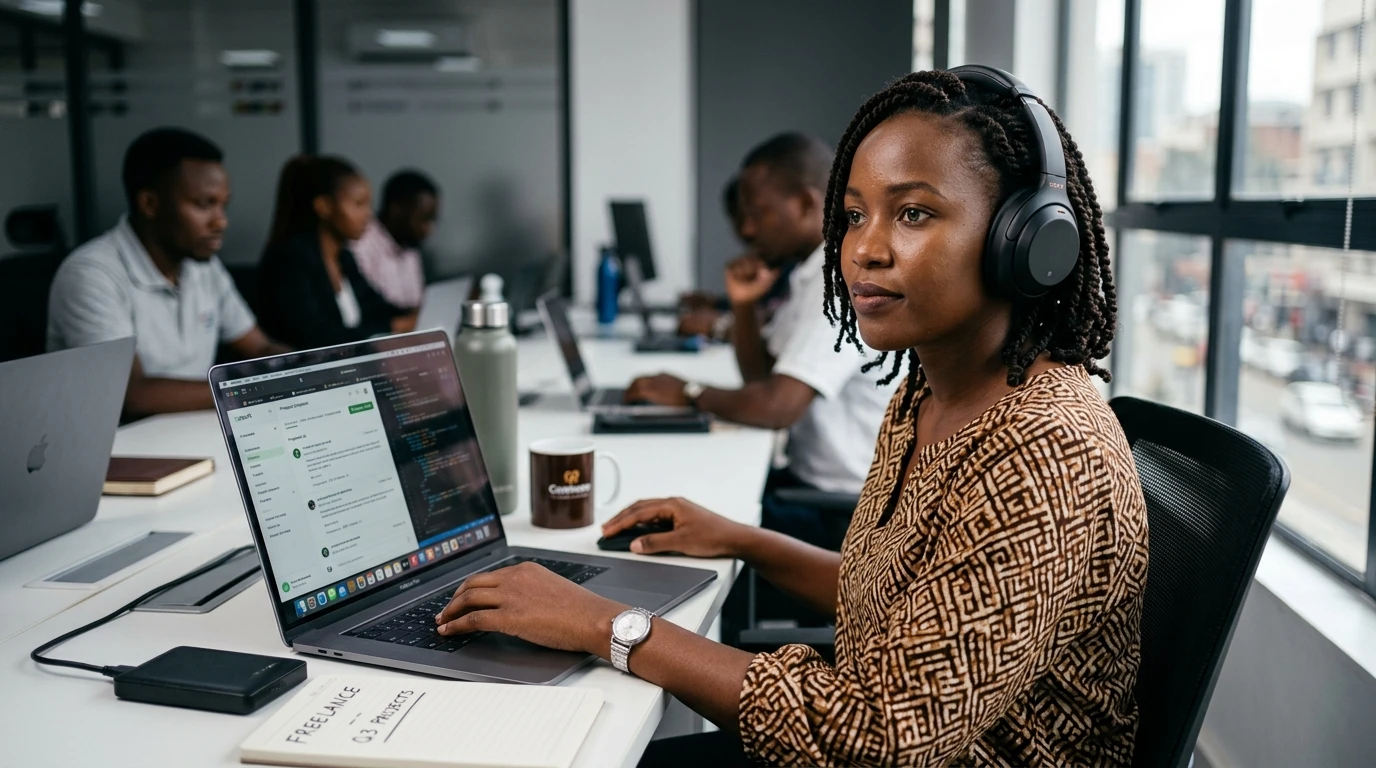
Method 1: Freelancing — Sell Your Skills to the World
If you have a skill — any skill — you can start earning money online today. Freelancing is honestly the fastest and most direct path to making money online with zero capital. You don't need to build a product. You don't need to set up a store. You just need to offer what you already know how to do, to people who need it done.
What Skills Can You Freelance With?
Think about everything you know how to do. You might be surprised. Here are some skills that are in extremely high demand globally:
- Writing and copywriting — blog posts, product descriptions, social media content
- Graphic design — logos, social media graphics, book covers
- Video editing — YouTube content, short-form videos, ads
- Social media management — running pages for businesses
- Web development and coding — building websites and apps
- Translation — especially if you speak French, Swahili, Hausa, or Arabic alongside English
- Virtual assistance — managing emails, calendars, customer service
- Data entry — simple but consistent work
- Voice-over recording — a skill many Africans have naturally
Where to Find Freelance Work — Free Platforms
All of these platforms are free to join:
- Fiverr — Create a "gig" offering your service. Clients come to you.
- Upwork — Apply to client job postings. Excellent for higher-paying long-term contracts.
- Freelancer.com — Similar to Upwork with open bidding.
- LinkedIn — Build a professional profile and let clients find you.
- PeoplePerHour — Great for European clients.
- Toptal — Premium platform for top developers and designers.
Chisom, a 22-year-old from Enugu, Nigeria, started freelancing as a content writer after finishing secondary school. She had no laptop — only a cheap Android phone. She wrote her first articles using the Google Docs app, sent them to clients on Fiverr, and within her first three months, she had earned enough to buy a secondhand laptop. Today, she earns the equivalent of a comfortable monthly salary entirely from writing. Her starting capital? Zero naira. Her starting tool? A phone she already owned.
Chisom's story isn't magic. It's just evidence that the barrier to entry is truly that low. The only real investment she made was time and consistency. [LINK: How to Start Freelancing in Nigeria With Just a Smartphone]
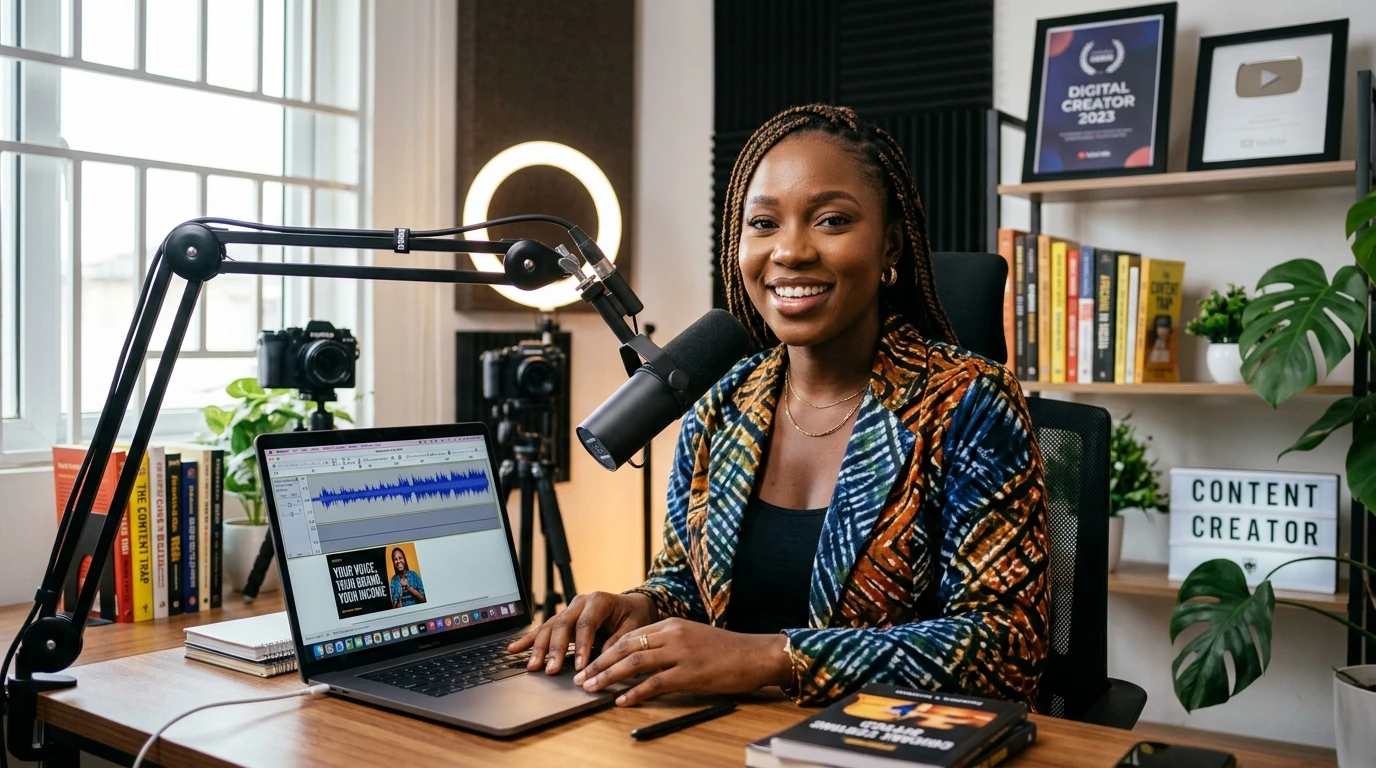
Method 2: Content Creation — Your Voice, Your Brand, Your Income
Content creation is one of the most exciting — and most misunderstood — ways to build an online business. People hear "content creator" and they immediately think of international celebrities with millions of subscribers. But the truth is, you don't need millions of followers to make meaningful income from content creation. You need the right audience and the right strategy.
Content creation can take many forms: YouTube videos, TikTok videos, Instagram Reels, blog posts, podcasts, or even a simple newsletter. What matters is that you are consistently creating valuable content around a topic you genuinely care about.
How Do Content Creators Make Money With Zero Capital?
- YouTube Ad Revenue — Once you reach 1,000 subscribers and 4,000 watch hours, you can apply for monetisation.
- Brand Sponsorships — Companies pay creators to mention their products. Even micro-influencers (5,000–50,000 followers) earn from this.
- Affiliate Marketing — Earn commissions by recommending products (more on this in Method 4).
- Selling Digital Products — Sell courses, e-books, or templates to your audience.
- Fan Support — Platforms like Patreon allow your audience to support you monthly.
What Should You Create Content About?
This is where most people get stuck. The answer is simple: create content about something you know and love. African food recipes. Local travel guides. Personal finance tips for African millennials. Motivation and self-development. Comedy skits in your local language. Tech tutorials. Football analysis. Hair and beauty. Farming and agriculture. The list is endless.
"Don't wait until you have a perfect setup. Start with what you have. The phone in your pocket is a studio." — Mark Essien, Nigerian Tech Entrepreneur
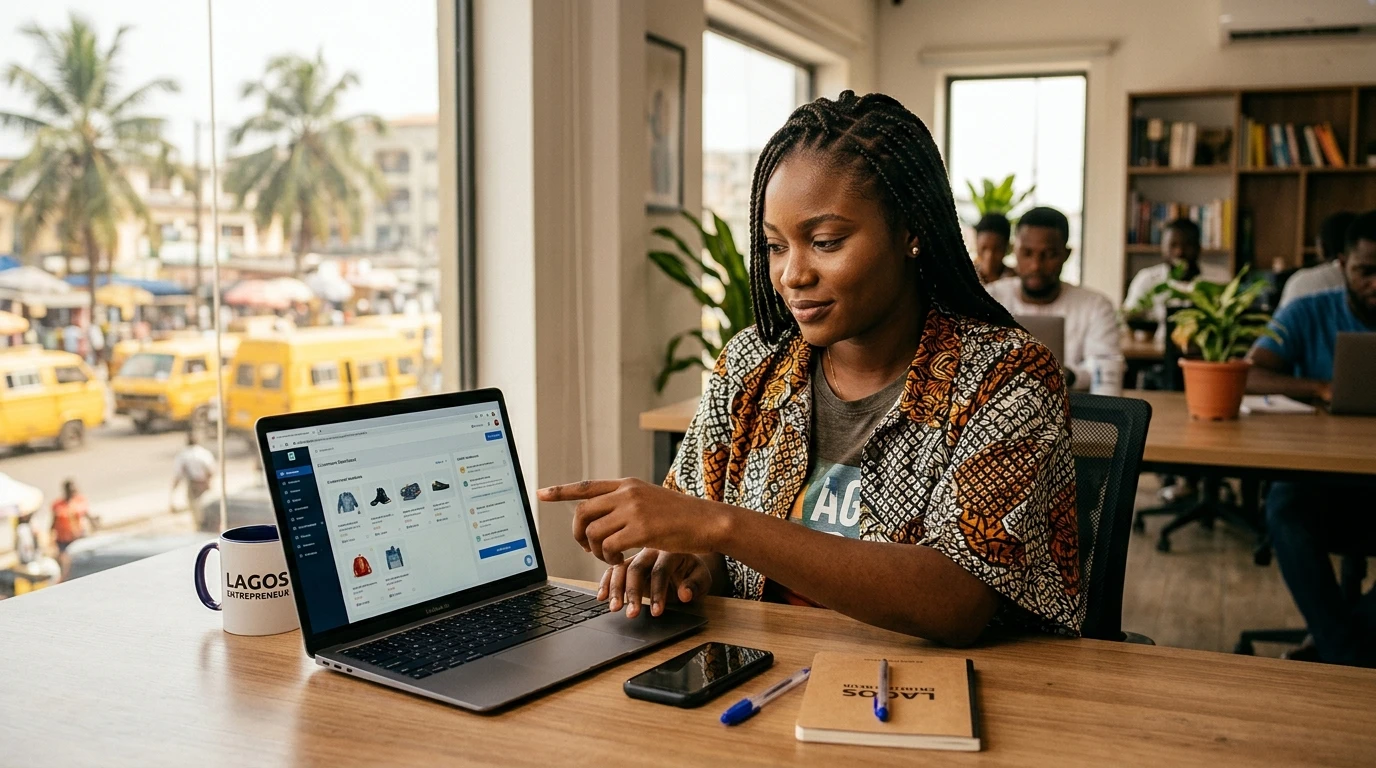
Method 3: Dropshipping — Sell Products Without Buying Any Stock
Dropshipping is one of those business models that sounds complicated but is actually beautifully simple. Here's how it works: You set up an online store. A customer orders a product from your store. You pass that order to a supplier, who ships the product directly to the customer. You never touch the product. You never buy stock upfront. Your profit is the difference between what the customer paid you and what you paid the supplier.
The most beautiful part? You can start with zero capital. Platforms like Shopify offer free trials. Jumia and Konga in Nigeria have seller programs where you can list products without buying them first. And globally, platforms like AliExpress are filled with suppliers ready to ship worldwide.
How to Start Dropshipping in Africa — Step by Step
- Choose a niche — Focus on a specific product category. Women's fashion accessories, baby products, electronics accessories, and health products tend to do well.
- Find suppliers — Use AliExpress, Alibaba, or local wholesale markets. Build relationships with suppliers who offer reliable shipping.
- Create a free online store — Use Jumia Global Seller, Konga Seller Hub, or even a free Instagram business page to showcase products.
- Market your products — Use free social media marketing (WhatsApp, Instagram, Facebook groups) to drive traffic.
- Process orders — When a customer pays you, use that payment to buy from your supplier. No upfront stock needed.
- Provide great customer service — This is your biggest competitive advantage against big companies.
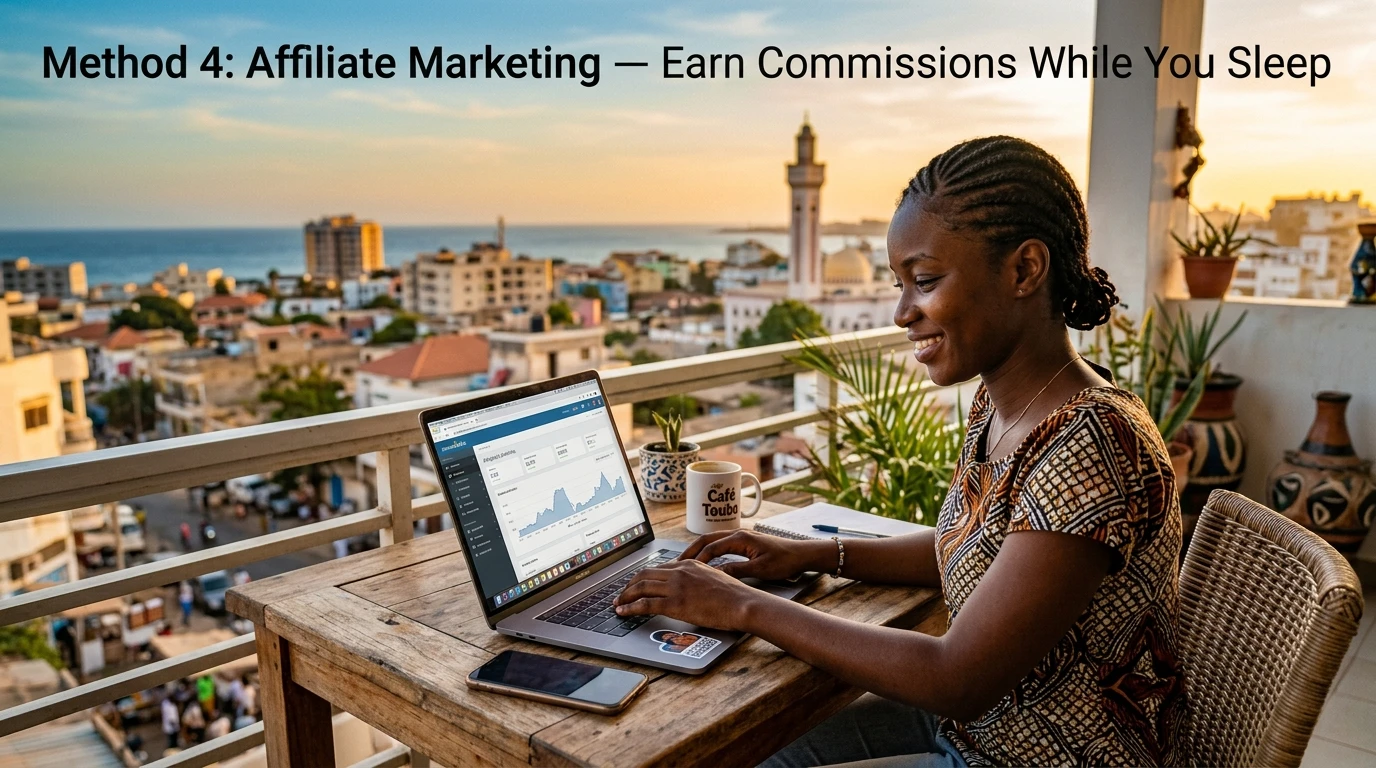
Method 4: Affiliate Marketing — Earn Commissions While You Sleep
Affiliate marketing is the art of recommending other people's products and earning a commission when someone buys through your recommendation. It is one of the most passive forms of online income you can build, and it costs absolutely nothing to start.
Here's a simple example. You create a YouTube video or blog post reviewing the best smartphones under 50,000 naira. In the description, you include a special affiliate link to each phone on Jumia. Every time someone clicks your link and buys, you earn a percentage of the sale. You did the work once — the video keeps earning while you sleep.
Top Affiliate Programs Available to Africans
| Program | Commission Range | Best For |
|---|---|---|
| Jumia Affiliate Program | 3%–12% per sale | Nigerian and African audiences |
| Konga Affiliate Program | Up to 9% per sale | Nigerian audiences |
| Amazon Associates | 1%–10% per sale | Global audience with US-focused content |
| Clickbank | Up to 75% per sale (digital products) | Global — especially digital products |
| ShareASale | Varies by merchant | Fashion, lifestyle, tech niches |
| Expertnaire (Nigeria) | Up to 50% per sale | Nigerian digital products market |
Kwame from Accra, Ghana, started an Instagram page dedicated to reviewing affordable tech gadgets for Ghanaian consumers. He consistently posted honest reviews, used affiliate links from Jumia Ghana, and engaged with his growing audience every single day. Within eight months, his affiliate commissions were covering his university tuition. He started with nothing but a phone and an opinion. The world paid him for sharing it.
Keys to Succeeding in Affiliate Marketing
- Build trust first — Your audience must trust your recommendations. Never promote something you wouldn't use yourself.
- Choose a niche you understand — You can't authentically recommend products you know nothing about.
- Be consistent — Affiliate income grows slowly and then all at once. Most people quit right before the breakthrough.
- Diversify platforms — Use a combination of blog, social media, and email newsletter to reach people.
Method 5: Online Tutoring and Selling Digital Courses
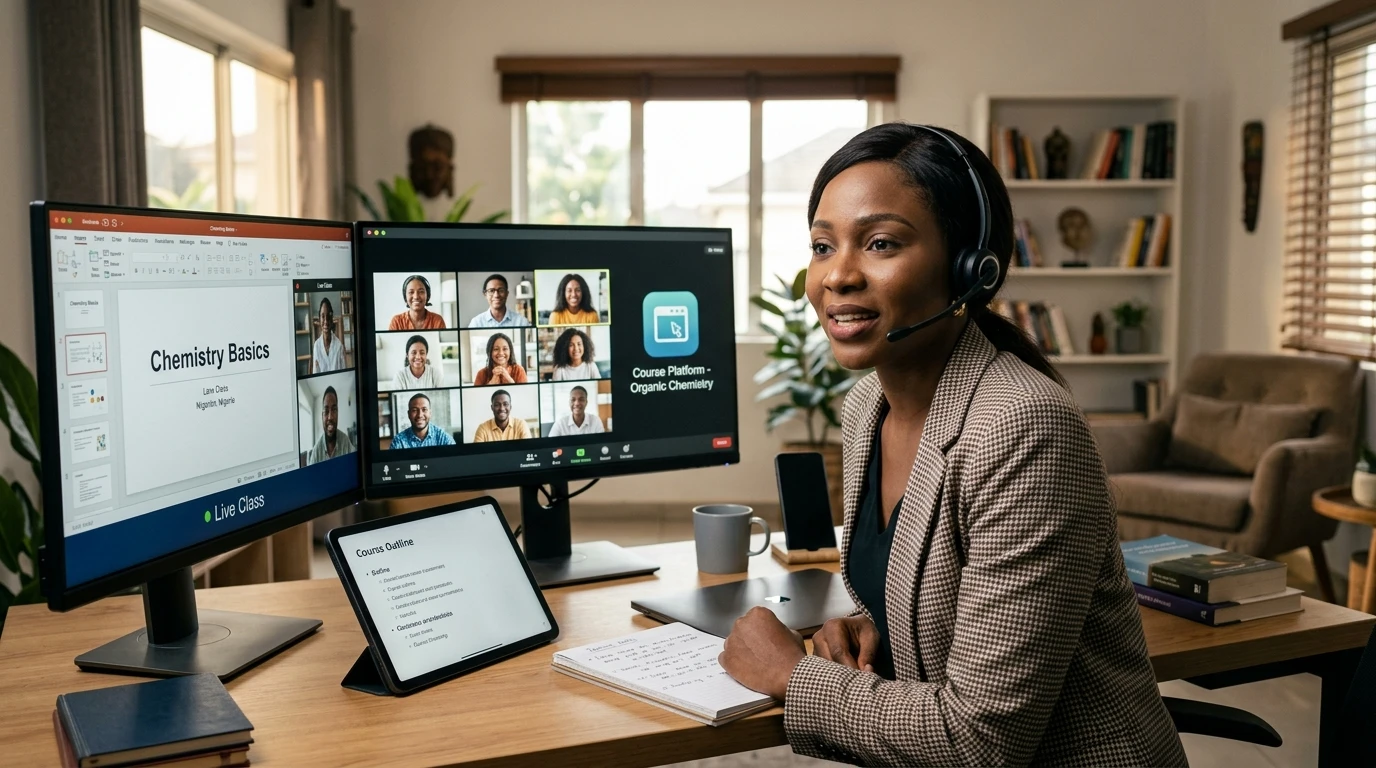
What do you know how to do that other people are struggling with? Seriously, think about that. Are you good at mathematics? Can you play guitar? Do you understand accounting? Are you fluent in multiple languages? Are you a skilled cook who knows traditional recipes? Whatever it is — there is someone out there willing to pay you to teach them.
Online tutoring and digital course creation have exploded in popularity across Africa, especially as more people recognise the value of learning new skills. The global e-learning market is projected to be worth hundreds of billions of dollars, and Africa's share is growing rapidly as internet access improves.
How to Start Online Tutoring With No Money
- Identify what you can teach — School subjects, professional skills, creative arts, languages, business skills, or life skills.
- Choose your platform — Free options include YouTube Live, Zoom (free tier), Google Meet, or even WhatsApp group classes.
- Create a simple curriculum — Outline what students will learn in each session. Structure builds trust.
- Start marketing for free — Post in Facebook groups, WhatsApp groups, and student forums. Word of mouth is powerful.
- Charge for your sessions — Accept payment via M-Pesa, Paystack, bank transfer, or Flutterwave.
- Scale with a digital course — Once you've taught the same thing multiple times, record it and sell it as a one-time purchase course on Selar, Teachable, or Udemy.
"Education is the most powerful weapon which you can use to change the world." — Nelson Mandela
And what Mandela didn't say, but what we know now, is that education shared through the internet can also be a powerful income stream. Sharing your knowledge is not just profitable — it is genuinely contributing to someone else's growth. That combination of meaning and money is rare, and beautiful.
Method 6: Social Media Management — Help Businesses Grow Online
Here is something that surprises many people: a huge number of African businesses — restaurants, shops, salons, professional services, hospitals, schools — have little to no social media presence. Or if they do have pages, those pages are poorly managed, rarely updated, and completely failing to attract customers. This gap between where businesses are and where they need to be online? That gap is your business opportunity.
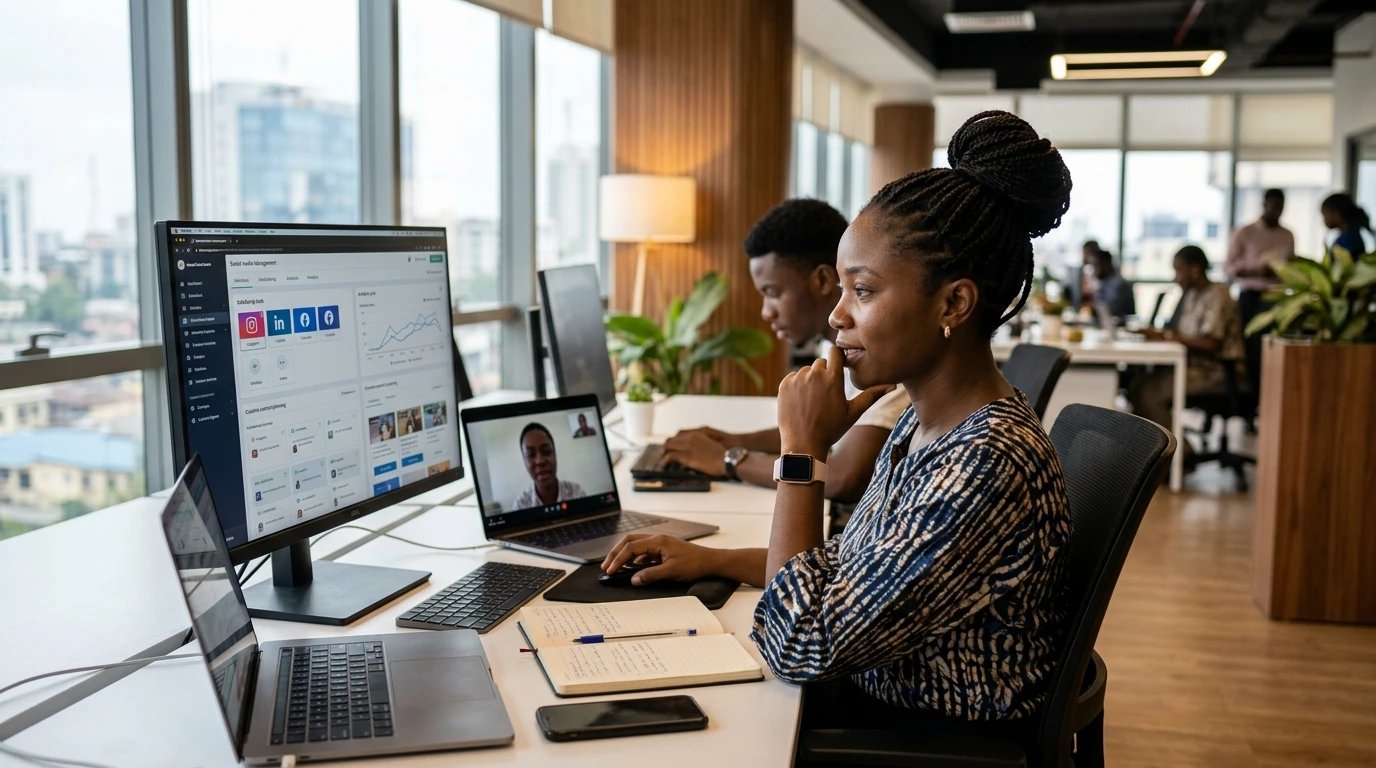
If you understand how Instagram, Facebook, TikTok, LinkedIn, or Twitter (X) work — even just as a daily user — you already have more knowledge than most small business owners. You can offer to manage their social media pages, create content for them, grow their following, and run their online marketing. And you can charge good money for it.
What Does a Social Media Manager Actually Do?
- Create and schedule posts on behalf of the business
- Design graphics using free tools like Canva
- Respond to comments and messages
- Grow the page's followers organically
- Run paid ad campaigns (this is an advanced skill you can learn for free on YouTube)
- Track and report performance metrics to the client
How to Get Your First Client
This is where most people get stuck. The trick is simple: start local. Look at businesses in your neighbourhood or town. Check their Instagram and Facebook pages. If they look neglected — low engagement, poor visuals, irregular posting — approach the owner. Offer to manage their page for one month at a very low rate (or even free) in exchange for a testimonial and portfolio sample.
Once you have results to show (a page that grew from 200 followers to 2,000, for example), getting paid clients becomes significantly easier. Your portfolio is your proof. And it costs you nothing to build it except time.
Amara, a 19-year-old from Freetown, Sierra Leone, offered to manage the Instagram page of a local restaurant for free for 30 days. She redesigned their feed, started posting daily food photos (taken with her phone), and began engaging with followers consistently. The restaurant's page grew from 400 to 3,800 followers in a month. Bookings went up. The owner happily paid her a monthly retainer from month two onwards. Amara now manages five business pages and earns more than most of her classmates who went into traditional employment. She invested nothing but her time and creativity.
Method 7: Starting a Dropshipping or Reselling Business on WhatsApp
Wait — didn't we already cover dropshipping? Yes, but this method is specifically tailored for the African context, because WhatsApp commerce is a genuinely unique opportunity that most global online business articles completely ignore. And that's exactly why we are highlighting it.
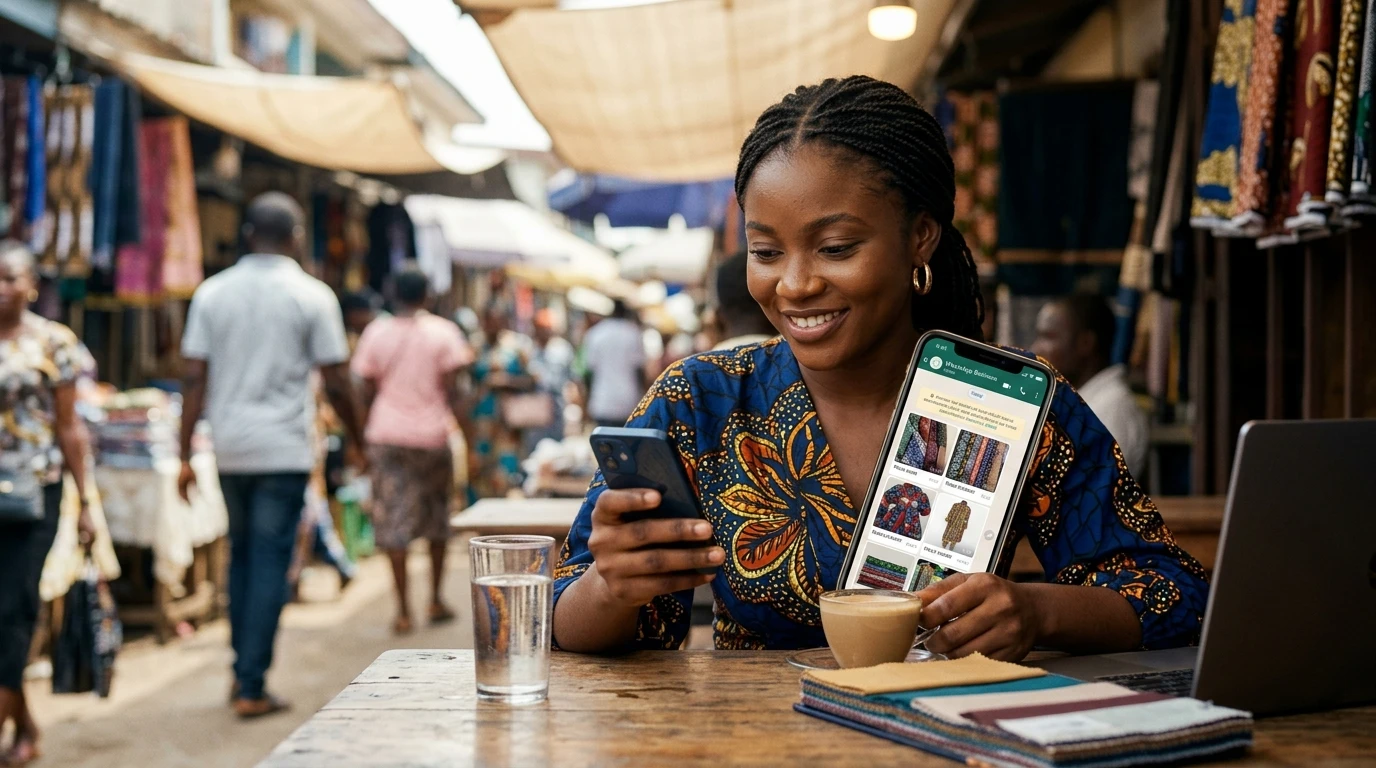
In Africa, WhatsApp is not just a messaging app. It is a marketplace. Millions of people buy and sell through WhatsApp every single day. Clothes, food, cosmetics, electronics, jewellery, school supplies, furniture — you name it, someone is selling it on WhatsApp right now. And if you're not one of them, you are missing out on an enormous opportunity.
How the WhatsApp Business Model Works
- Download WhatsApp Business — It's free. Set up a professional profile with your business name, logo (create one free on Canva), and description.
- Source products — Find items at wholesale prices from local markets, Alibaba, or even fellow sellers willing to give you stock on consignment.
- Build a catalogue — WhatsApp Business lets you upload product photos, descriptions, and prices in a neat catalogue format.
- Grow your broadcast list — Add contacts who express interest. Share updates about new products, offers, and deals.
- Use WhatsApp Status strategically — Post product photos and videos on your Status daily. This is free advertising to all your contacts.
- Provide exceptional service — Fast replies, honest descriptions, and reliable delivery will generate referrals.
The power of the WhatsApp model is trust and community. People are more likely to buy from someone they know or who has been referred to them by someone they trust. You are not competing with Jumia or Amazon. You are competing for the trust of a community — and that is a competition a real human being can always win over a faceless corporation.
The Mindset That Separates Those Who Make It From Those Who Don't
We would be doing you a disservice if we gave you all these practical strategies without talking about the most important ingredient of all: your mindset. Because here is the honest truth — thousands of people will read this article. A small percentage will actually do something about it. And the difference between those two groups will not be intelligence, or talent, or even time. It will be mindset.
The Five Mindset Shifts You Need Right Now
- Stop waiting for the perfect moment. There is no perfect moment. The best time to start was yesterday. The second best time is right now. Every day you wait is a day someone else is building what you could have built.
- Accept that you will fail sometimes — and that's okay. Failure is not the opposite of success. It is part of the process. Every successful African entrepreneur you admire has a story of failure behind their success. The ones who made it were not the ones who never fell — they were the ones who got back up.
- Stop comparing your beginning to someone else's middle. When you see a content creator with 500,000 subscribers, you are not seeing the three years of 10-subscriber videos they made before anyone cared. Everyone starts somewhere small.
- Value your time as currency. You may not have money to invest, but you have time. And time invested wisely builds the money that money alone cannot. Treat your time with the same seriousness you would treat capital.
- Believe that Africa is a legitimate market. Your fellow Africans are willing to pay for quality products and services. Do not underestimate your own people. Build for them, serve them well, and they will pay you well.
"The richest people in the world look for and build networks. Everyone else looks for work." — Robert Kiyosaki, Author of Rich Dad Poor Dad
Tools You Need to Start — And They're All Free
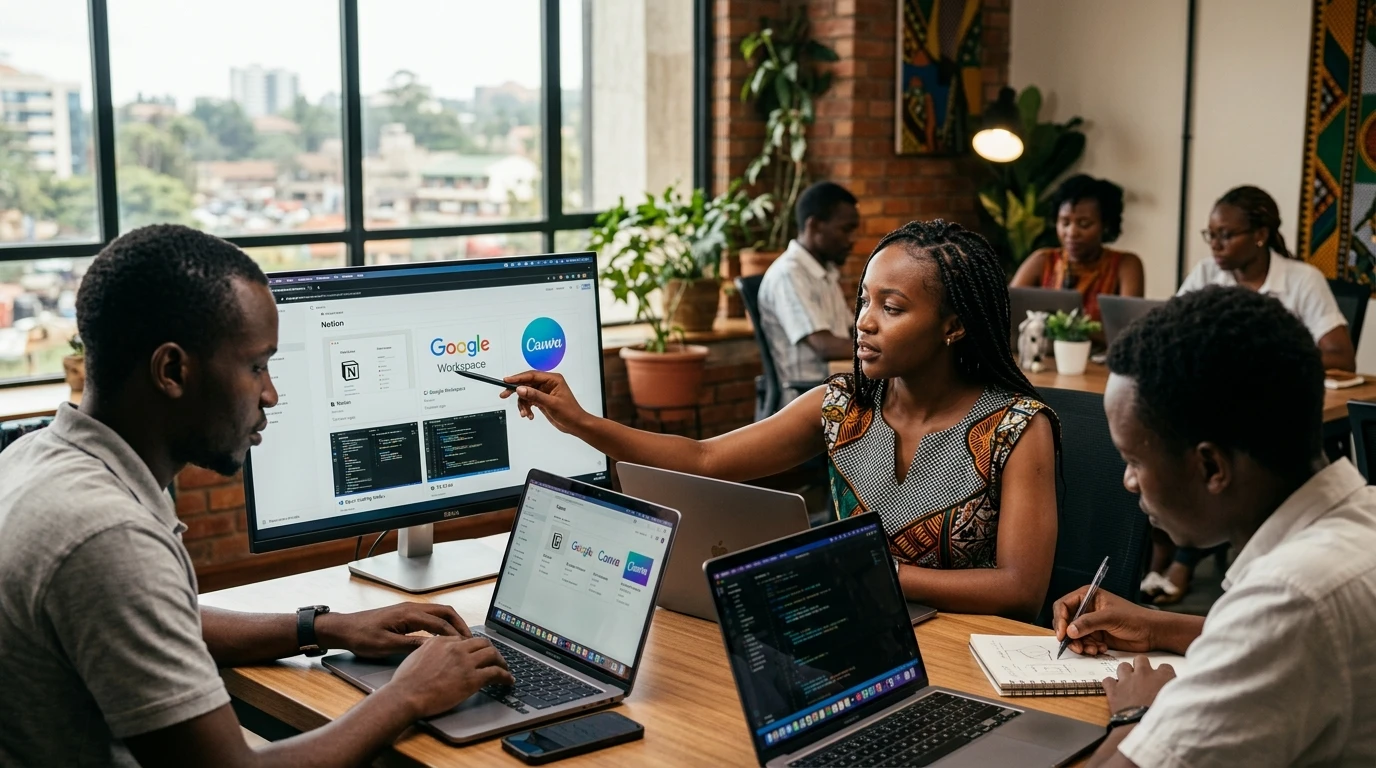
One of the most common excuses for not starting is "I don't have the tools." Let's dismantle that excuse right now. Here is every tool you could possibly need to start any of the seven business methods above — and every single one of them is completely free.
| Tool | What It Does | Free Version? |
|---|---|---|
| Canva | Design graphics, logos, posts, presentations | Yes — fully usable free tier |
| Google Docs / Sheets | Write content, track finances, plan business | Yes — completely free |
| Gmail | Professional email communication with clients | Yes |
| WhatsApp Business | Product catalogue, business profile, client communication | Yes |
| CapCut | Free video editing app for mobile | Yes |
| Meta Business Suite | Manage Facebook and Instagram business pages | Yes |
| Selar.co | Sell digital products and courses | Yes (commission on sales only) |
| Paystack / Flutterwave | Receive payments from customers online | Yes (small transaction fee only) |
| Fiverr / Upwork | Find freelance clients globally | Yes (free to join) |
| YouTube Studio | Upload and manage your video content | Yes |
| Mailchimp | Build and send email newsletters | Yes — free up to 500 subscribers |
| Linktree | Share multiple links from one bio link |
Look at that list carefully. Every single tool you need to build a real, profitable online business in Africa is available to you right now, for free. The smartphone in your pocket can run every single one of those applications. The only thing standing between you and your first online income is the decision to begin.
How to Handle Payments as an African Online Business Owner
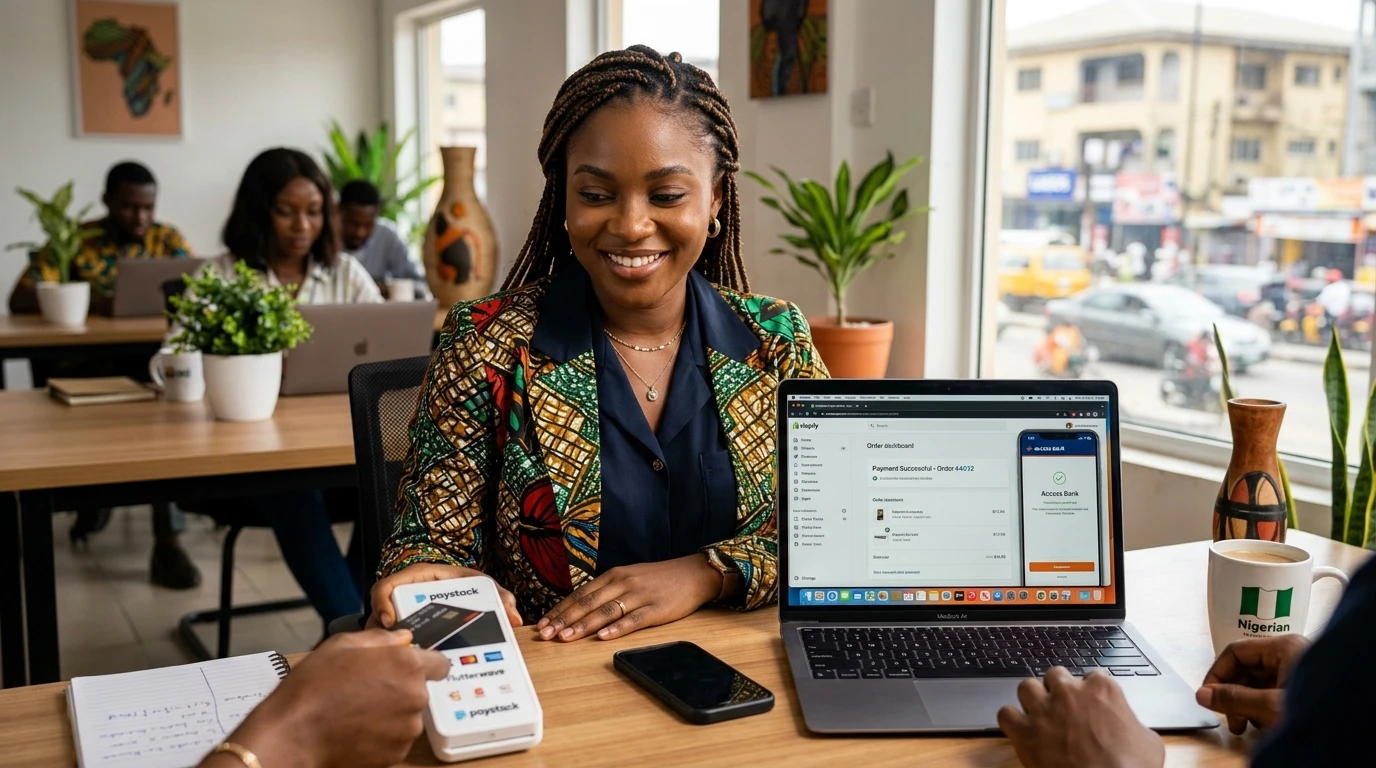
One of the most practical concerns for anyone starting an online business in Africa is this: "How do I actually receive my money?" It's a legitimate question, and it deserves a straightforward answer. The good news is that the African fintech ecosystem has evolved dramatically over the last decade, and collecting payments — whether from local customers or international clients — has never been simpler.
Receiving Money From Local African Customers
If your customers are based in Nigeria, Kenya, Ghana, South Africa, or most other African countries, these tools will serve you extremely well:
- Paystack — Excellent for Nigerian businesses. Accepts cards, bank transfers, and USSD payments. Free to create an account; charges a small percentage per transaction.
- Flutterwave — Operates across multiple African countries. Great for businesses serving customers in more than one African market.
- M-Pesa — The dominant mobile money platform in Kenya, Tanzania, and several other East African countries. Incredibly trusted and widely used.
- MTN Mobile Money (MoMo) — Widely used across West and Central Africa. Essential if you're serving customers in Ghana, Cameroon, Côte d'Ivoire, or Uganda.
- Direct bank transfer — Simple and trusted. Many African customers still prefer this, especially for larger transactions.
Receiving International Payments as an African Freelancer or Creator
If you are freelancing for clients abroad or selling digital products to international customers, these platforms are your best options:
- Payoneer — One of the most widely used payment platforms for African freelancers. Accepted by Fiverr, Upwork, Amazon, and many other global platforms. You receive a Mastercard that works at ATMs.
- Wise (formerly TransferWise) — Excellent exchange rates and low fees for receiving foreign currency. Trusted by freelancers worldwide.
- Chipper Cash — Africa-focused platform that allows cross-border payments across multiple African countries and internationally.
- Grey Finance — Nigerian-founded platform that gives you a US, UK, or EU bank account, allowing you to receive international payments as if you were based abroad.
- Geegpay — Similar to Grey, specifically built for African remote workers and freelancers to receive foreign currency payments.
The days of being cut off from the global economy because of geography are behind us. Whether you are receiving $10 from a TikTok brand deal or $5,000 from a long-term freelance client in Canada, there is a clear, reliable path to getting that money into your hands. Remove "I can't receive payment" from your list of excuses — because it simply is not true anymore.
Common Mistakes to Avoid When Starting an Online Business in Africa
We have spent most of this article telling you what to do. But part of genuine, trustworthy advice is also telling you what not to do. These are the most common mistakes that cause talented, motivated Africans to fail before they ever really get started — and knowing about them in advance could save you months or even years of frustration.
Mistake 1: Trying to Do Everything at Once
After reading this article, you might feel excited about freelancing, content creation, affiliate marketing, social media management, and dropshipping all at the same time. Resist that temptation. Spreading yourself across five different business models with zero experience in any of them is a recipe for doing everything poorly. Pick one method. Master it. Start earning from it. Then, and only then, consider adding a second income stream.
Mistake 2: Giving Up Too Early
Most online businesses take between three and twelve months before they generate meaningful, consistent income. The people who quit after two weeks of "no results" never give their business the chance to grow. According to a study by Upwork on freelancer income trajectories, the majority of freelancers who eventually earned full-time income reported that their first two to three months felt almost completely unproductive. Push through that period. What feels like nothing is actually everything — it's the foundation being laid.
Mistake 3: Underpricing Your Services
Many African freelancers and service providers dramatically underprice their work out of fear that clients won't pay more. This creates a vicious cycle: low prices attract difficult, low-quality clients, which burns you out, which makes you think the business doesn't work. Research market rates for your skill on platforms like Fiverr and Upwork. Price yourself fairly — not the cheapest, and not the most expensive, but in line with the value you genuinely deliver.
Mistake 4: Neglecting Customer Service
In a world where people have endless options, customer service is your greatest differentiator. Respond quickly. Be professional and warm. Deliver what you promise. Handle complaints gracefully. The African market, perhaps more than most, runs on referrals and word of mouth. One delighted customer can bring you five more. One disappointed customer can take ten away.
Mistake 5: Waiting Until You Feel "Ready"
Here is a secret that experienced entrepreneurs know well: nobody ever feels fully ready. The confidence you're waiting for doesn't arrive before you start — it arrives because you started. Action creates confidence. Not the other way around. The first video will be imperfect. The first freelance proposal will feel awkward. The first product listing will look basic. Do it anyway. Everything improves with practice, and the only way to get the practice is to begin.
Frequently Asked Questions About Starting an Online Business in Africa
These are the questions we hear most often from aspiring African online entrepreneurs. Let's answer them honestly.
Can I really start an online business with no money at all?
Yes — with one honest clarification. "Zero capital" means you don't need startup cash. But you do need a device (even a basic smartphone works) and internet access. Many of the methods in this article have been started by people using shared internet at cybercafés, borrowing a family member's phone, or using free Wi-Fi at schools and libraries. If you have any way to access the internet regularly, you have enough to begin.
Which online business method is fastest to make money from?
Freelancing is generally the fastest path to your first payment because you are exchanging a skill directly for money, with no waiting for an audience to build. If you have a marketable skill and create a profile on Fiverr or Upwork today, it is entirely possible to receive your first payment within your first two to four weeks, depending on how actively you pursue clients.
Do I need to register my business first?
In most African countries, you are not legally required to register a business before you start earning income as an individual. You can begin operating under your own name. Once your business grows and generates consistent income, registration becomes important for tax compliance, credibility with larger clients, and access to financial services. But for the purposes of starting, registration is not a prerequisite. Don't let paperwork be the reason you delay beginning.
What if I don't have a skill to freelance with?
Then your first task is to learn one — and the internet makes this easier than ever. YouTube alone contains thousands of free, high-quality tutorials on graphic design, video editing, copywriting, web development, and more. Platforms like Google's Digital Skills for Africa program and Meta's Blueprint program offer free certifications you can complete on your phone. Within 30 to 60 days of focused learning, you can be competent enough in a new skill to begin offering it professionally.
Is it safe to receive payments from international clients?
Yes, when you use established platforms. Payoneer, Wise, Grey, and Geegpay all have robust security measures and are used by millions of African professionals. Always use official platform payment systems (like Fiverr or Upwork's built-in payment processing) rather than agreeing to direct wire transfers from strangers — that is where scams can occur. Legitimate clients using Yes, when you use established platforms. Payoneer, Wise, Grey, and Geegpay all have robust security measures and are used by millions of African professionals. Always use official platform payment systems (like Fiverr or Upwork's built-in payment processing) rather than agreeing to direct wire transfers from strangers — that is where scams can occur. Legitimate clients using reputable platforms will never ask you to move outside the platform's payment system to receive money. Trust your instincts, stick to verified platforms, and your transactions will be safe.
How do I market my online business without money for advertising?
This is one of the most important questions you can ask, and the answer is genuinely encouraging. Organic marketing — the kind that costs nothing but time and creativity — is remarkably effective, especially in Africa where digital communities are tightly knit and word of mouth travels fast. Here are the most powerful free marketing strategies available to you right now:
- Post consistently on social media — Instagram, TikTok, Facebook, and LinkedIn are free to use. Show up daily. Share your work, your process, your results, and your personality.
- Join and contribute to relevant online communities — Facebook groups, WhatsApp groups, Reddit communities, and LinkedIn groups are full of your potential customers. Add value first; sell second.
- Ask for referrals from your first customers — A simple "If you enjoyed working with me, please recommend me to someone who might need this" costs nothing and can be the most powerful marketing tool you have.
- Use WhatsApp Status daily — Every contact you have sees your Status. That is free advertising to your entire network every single day.
- Create content that solves problems — Blog posts, YouTube videos, or social media posts that genuinely help people will attract an audience naturally over time, without a single naira spent on ads.
What if I try and it doesn't work out?
Then you will have gained something invaluable: real experience. You will know more about digital business, about your own strengths and weaknesses, and about what to do differently than you did before. Every attempt, even the ones that don't pan out the way you hoped, teaches you something that moves you closer to the one that works. The real risk is not trying and failing. The real risk is never trying at all, and spending the rest of your life wondering what might have been.
Your 30-Day Action Plan to Launch Your First Online Business in Africa
Knowledge without action is just information. So let's turn everything you've read into a concrete, practical plan you can start executing today. This 30-day roadmap is designed to take you from zero to your first online income — regardless of which method you choose to pursue.
Week 1: Decide and Prepare (Days 1–7)
- Day 1: Re-read the seven methods in this article. Write down the one that excites you most and feels most aligned with what you already know how to do.
- Day 2: Research your chosen method for two hours. Watch YouTube tutorials. Read success stories. Understand what the path forward looks like.
- Day 3: Set up your free accounts — Canva, Gmail, Fiverr, Upwork, WhatsApp Business, or whatever platforms your chosen method requires.
- Day 4: Create your profile. Make it professional, honest, and specific. Use a clear photo, a compelling description of your skills or services, and a warm, approachable tone.
- Day 5: Define your niche. Who exactly are you serving? What specific problem are you solving for them? The more specific you are, the easier it is to market yourself.
- Day 6: Create your first piece of content, your first gig listing, your first product description, or your first outreach message. Don't wait for it to be perfect. Put it out.
- Day 7: Rest, reflect, and plan the week ahead. Celebrate the fact that you have already done more than 90% of people who read articles like this.
Week 2: Build and Reach Out (Days 8–14)
- Send at least five outreach messages or proposals to potential clients, brands, or partners every single day.
- Post at least one piece of content on your social media platforms daily — showcasing your work, sharing your process, or providing genuine value to your audience.
- Join three relevant online communities and begin contributing meaningfully — answer questions, share insights, build relationships.
- Learn one new skill or technique related to your business method every day, even if it's just a 15-minute YouTube tutorial.
- Improve your profile or listing based on what you observe in the market. What are successful competitors doing that you aren't?
Week 3: Refine and Persist (Days 15–21)
- Review your outreach results. Which approaches generated responses? Do more of what worked. Adjust what didn't.
- If you haven't received your first client or sale yet, double your outreach efforts. Consistency is the game — most people quit right here. Don't be most people.
- Ask someone you trust to give you honest feedback on your profile, your content, or your pitch. External perspective is invaluable.
- Begin building a simple portfolio or evidence of your work — screenshots, testimonials, before-and-after results, sample projects. Proof builds trust, and trust drives sales.
Week 4: Deliver and Grow (Days 22–30)
- By this point, many people following this plan will have received their first client, their first sale, or their first meaningful engagement. Deliver extraordinary results. Over-deliver if you can.
- Ask your first client or customer for a testimonial or review. This single piece of social proof will make every future sale easier.
- Reinvest any early earnings into improving your setup — maybe a slightly better internet package, a ring light for videos, or a subscription to a helpful tool.
- Look back at Day 1 and recognise how much you have grown. Then set your goals for Month 2. Bigger, bolder, more specific.
The Bigger Picture — What Your Online Business Can Mean for Africa
We want to close this article with something that goes beyond personal income. Because while building a profitable online business will genuinely change your own life — and we believe it will — it can also be part of something much larger than yourself.
Africa is a continent of 1.4 billion people. The African Union's Agenda 2063 envisions a prosperous, digitally integrated Africa driven by innovation, entrepreneurship, and the talents of its young people. According to the International Finance Corporation (IFC), small and medium-sized enterprises are responsible for 80% of employment in Sub-Saharan Africa. When you build a business — even a small one, even a solo online business — you are contributing to that ecosystem. You are part of the solution to youth unemployment. You are a data point that challenges the narrative that Africans can only consume global digital culture and never create it.
When Chisom earns as a freelance writer, she spends in her local market, supports her family, and becomes a living example to younger girls in her community that self-determination is possible. When Kwame's affiliate commissions fund his education, he is one degree closer to building something that employs others. When Amara grows a small business's social media page, she is making that business more competitive, which means that business creates more jobs and serves more customers in her community.
This is not small. This is genuinely significant. And it starts with you, today, making the decision to begin.
"The digitisation of Africa is not just a tech story. It is an economic emancipation story." — Strive Masiyiwa, Founder of Econet Group
Final Words — From Us to You
We started this article by talking about that little voice — the one that whispers "But where will the money come from?" every time a big idea appears. We hope that by now, that voice is a little quieter, and a different voice has grown a little louder. The voice that says: "I have what it takes. I can start with what I have. I can begin today."
Because you can. Not someday. Not when the economy improves Not when the economy improves. Not when you have better equipment. Not when you feel more confident. Today. With the phone in your hand, the knowledge in your head, and the hunger in your heart.
Africa's digital revolution is not waiting for anyone. It is happening right now, in real time, in Lagos and Nairobi and Accra and Kampala and Dakar and Cape Town. And the people who are building wealth from it are not necessarily the most educated, the most connected, or the most resourced. They are simply the ones who decided to start.
You have now read everything you need to take your first step. You know the seven methods. You know the free tools. You know how to receive payment. You know the mindset you need to protect. You have a 30-day action plan sitting right above these words. There is nothing left between you and your first online income except a decision.
So make it. Right now, before this tab closes and life pulls you back into its usual current. Open Canva. Create your Fiverr profile. Post your first WhatsApp Status. Send your first DM to a potential client. Write the first paragraph of your first blog post. Do the smallest possible thing that moves you one step forward. Because one step leads to another, and another, and before long you look back and realise you have walked an entire distance you once thought was impossible.
We are rooting for you. Africa is rooting for you. Now go and build something extraordinary.
About This Article
This guide was written by the editorial team at Mayobe Bros (mayobebros.com), an African news and lifestyle platform dedicated to sharing practical, honest, and empowering content for everyday Africans navigating the digital economy. Our writers draw on direct experience working with African entrepreneurs, freelancers, and content creators across Nigeria, Kenya, Ghana, and beyond. Every strategy in this article has been tested in real African market conditions — not imported wholesale from Western entrepreneurship guides that don't account for the realities of internet costs, payment infrastructure, and local market dynamics on our continent.
Have questions? Drop them in the comments below. We read every single one and do our best to respond personally. Your journey matters to us.
Sources and References
- International Telecommunication Union (ITU) — Global Internet Usage Statistics, 2023
- GSMA — Mobile Economy Sub-Saharan Africa Report, 2023
- GSMA — State of the Industry Report on Mobile Money, 2023
- World Bank — Africa Population and Demographics Data
- Payoneer — Global Freelancer Income Report
- Statista / McKinsey — African E-commerce Market Valuation
- International Finance Corporation (IFC) — SME Employment in Sub-Saharan Africa
- Nielsen — Global Trust in Advertising Report
- African Union — Agenda 2063: The Africa We Want
- Upwork — Freelancer Income Trajectory Research
Last updated: 2024. Statistics and platform details are accurate at time of publication. We recommend verifying current commission rates and platform policies directly, as these can change.