

Every year, thousands of young Tanzanians sit their Form Six examinations, close their exercise books for the last time, and wait — hearts pounding — for what comes next. Among the most talked-about, most debated, and most misunderstood events that follow is the JKT selection for Form Six students. Some students dread it. Some embrace it. Some do not even know exactly what to expect until they are already on the bus heading to camp.
If you are a Form Six leaver, a parent watching your child nervously refresh the NECTA results portal, or a teacher trying to prepare your students for what lies ahead — this article is written specifically for you. We have done the research, spoken to former trainees, and broken down every detail you need to know about JKT selections in Tanzania, in plain, simple English that anyone can understand and relate to.
Let us be honest with each other from the very start: JKT is not a punishment. It is not something you should be afraid of. In fact, for many young Tanzanians, the JKT experience has been the single most character-defining chapter of their early adult lives. The discipline learned, the friendships forged, the resilience built — these are things no classroom can fully teach you. As one former trainee, Zawadi Mwangi, now a senior government official in Dar es Salaam, once shared:
"I went to JKT thinking my life was over. I came out knowing, for the first time, exactly who I was and what I was capable of. JKT gave me my backbone."
So take a deep breath. Pull up a chair. And let us walk through this journey together — because understanding the JKT selection process, what happens during training, and how to navigate it successfully could genuinely change the direction of your future for the better.
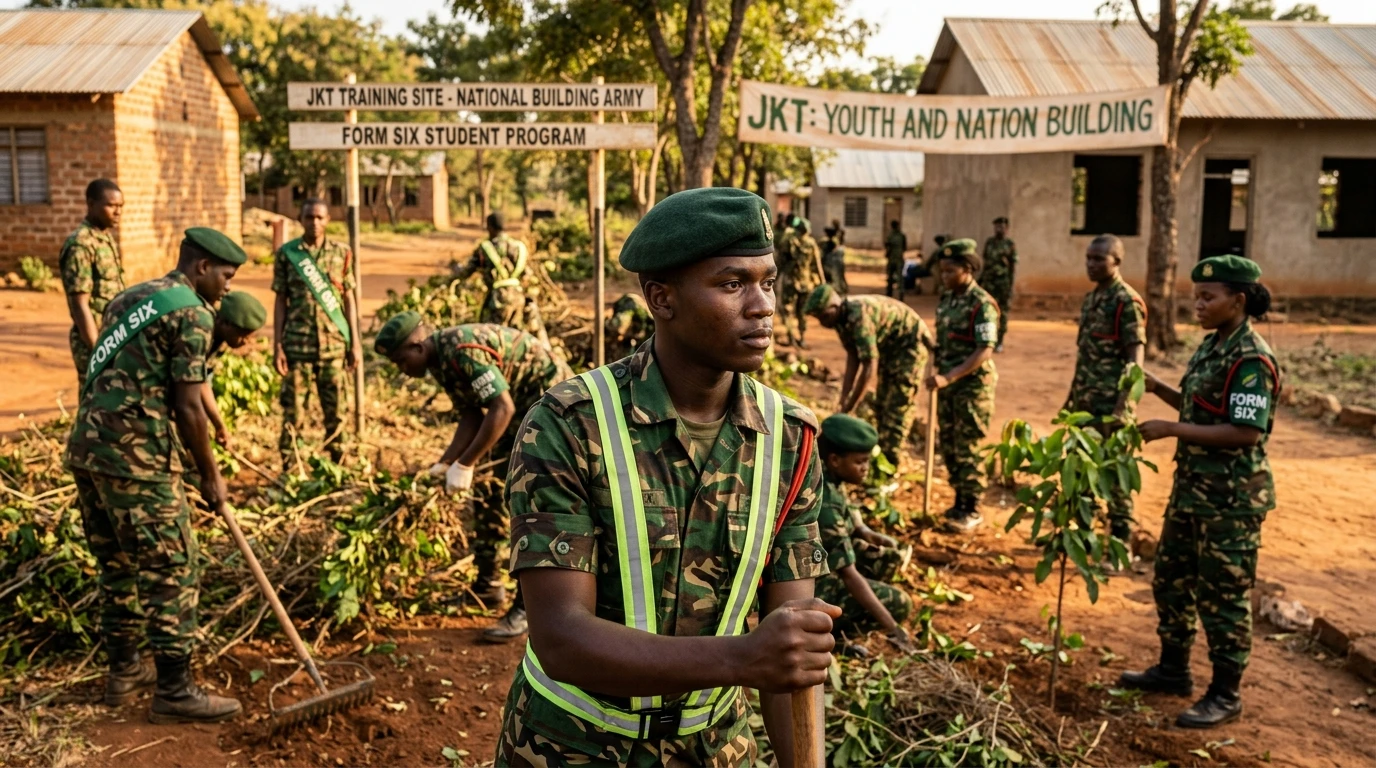
What Is JKT and Why Does It Involve Form Six Students?
Before we dive into the selection process itself, let us make sure we are all on the same page about what JKT (Jeshi la Kujenga Taifa) actually is. JKT, which translates directly to "The National Service Army" or the "Nation Building Army", is a Tanzanian national institution established under the National Service Act. It was created with a very specific and noble goal: to instill patriotism, discipline, unity, and a spirit of service into Tanzania's young citizens.
JKT operates under the Tanzania People's Defence Force (TPDF) and runs training camps across multiple regions of Tanzania, including well-known camps such as Mgulani, Ruvu, Makutopora, Bulombora, and Nachingwea, among others. [LINK: Tanzania national service camps locations guide]
Form Six students are selected for JKT training as part of a national service requirement. This is not optional for those selected — it is a civic obligation. However, the selection is not random and not without structure. There are specific criteria, a clear process, and meaningful outcomes tied to how a student performs during their time in camp.
Who Is Eligible for JKT Selection?
Not every Form Six student will be selected for JKT. The selection targets students who have completed their Advanced Level Secondary Education (Form Six) and who meet the following general criteria:
- Must be a Tanzanian citizen
- Must have completed and sat Form Six national examinations (ACSEE)
- Must be within the specified age range (typically between 18 and 25 years old)
- Must be physically fit and medically cleared
- Must not have been convicted of a criminal offence
Students who are selected are officially notified through their schools, through the Ministry of Education communications, or through announcements released via official government channels and national newspapers. If you are a Form Six leaver, always keep your school contacts active because this is often how the first notification reaches you.
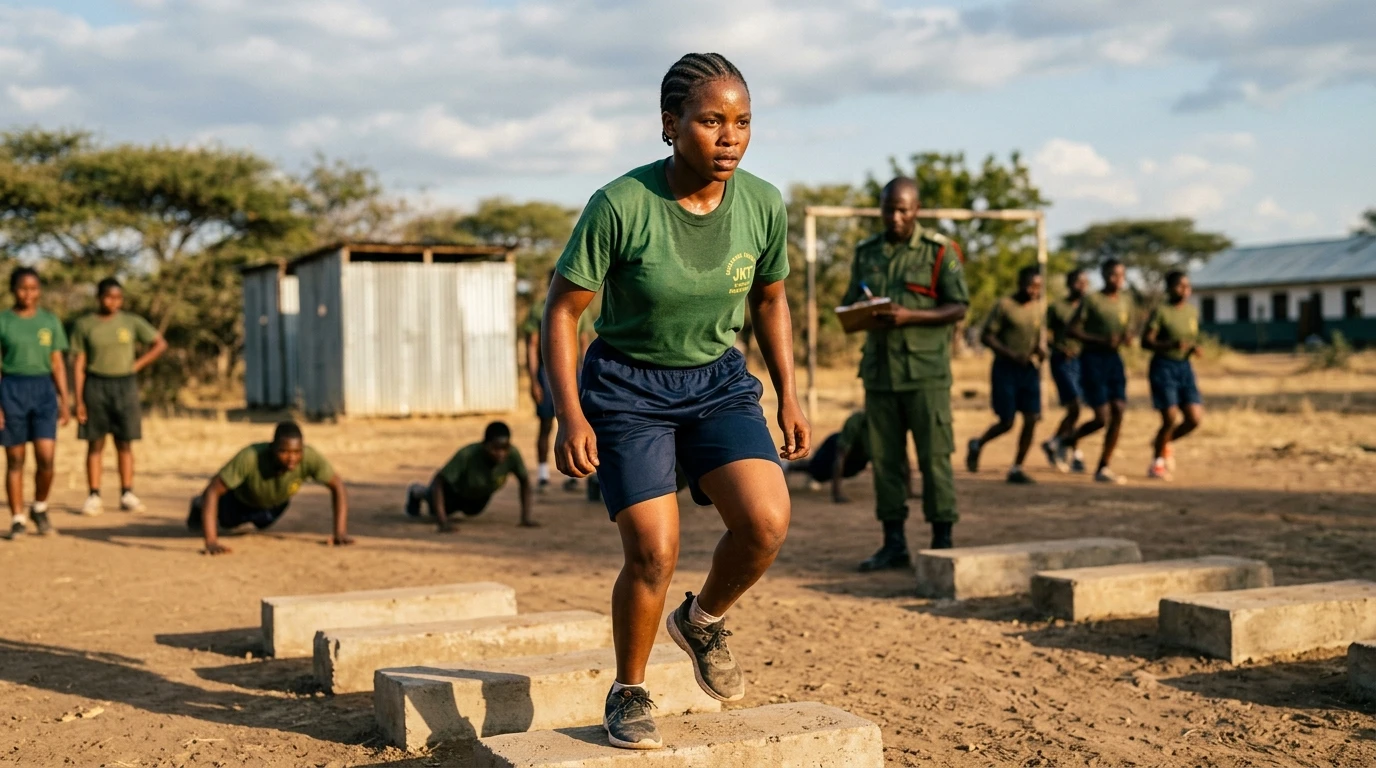
How the JKT Selection Process Actually Works
Understanding the selection process removes the fear of the unknown — and that is exactly what we want to do for you right here. The JKT selection for Form Six leavers follows a structured government-led process. Here is how it typically unfolds, step by step:
- Form Six examinations are completed – Students sit for the ACSEE (Advanced Certificate of Secondary Education Examinations) administered by NECTA.
- Results are released – NECTA releases the Form Six results, and these are used as a basis for identifying candidates for further national programmes, including JKT and university admissions.
- TCU/NECTA coordination – The Tanzania Commission for Universities (TCU) coordinates admissions for those proceeding to university, while the Ministry of Education and other relevant bodies manage the JKT allocation process.
- Selection lists are released – Official lists of selected Form Six students are published through school notice boards, government portals, and national media outlets.
- Reporting to designated camps – Selected students are given specific dates, times, and camps to report to. Failure to report without valid reason may have official consequences.
- Medical screening and registration – Upon arrival at camp, students undergo a medical examination and official registration into their training unit.
- Training commences – The formal JKT training programme begins, typically lasting between three and six months depending on the cohort and government planning.
What to Bring When Reporting to JKT Camp
Many students report to JKT camp underprepared simply because no one told them what to bring. Here is a practical packing checklist based on the standard requirements and experiences of former trainees:
| Item Category | Specific Items | Notes |
|---|---|---|
| Identity Documents | National ID / Birth Certificate, Form Six Result Slip, Selection Letter | Keep these in a waterproof folder |
| Clothing | Undergarments (several pairs), plain socks, civilian clothes for after-hours | Avoid flashy or branded clothing |
| Toiletries | Soap, toothbrush, toothpaste, deodorant, sanitary products (if applicable) | Keep quantities manageable |
| Bedding | Light blanket or kikoi, bedsheet | Check with your specific camp — some provide bedding |
| Footwear | Sturdy closed shoes or boots, sandals for bathing | Your feet will thank you during drills |
| Stationery | Notebook, pen, small dictionary | Classes are part of the training programme |
| Medications | Prescribed medication only, malaria prophylaxis if advised | Carry a doctor's letter for prescription drugs |
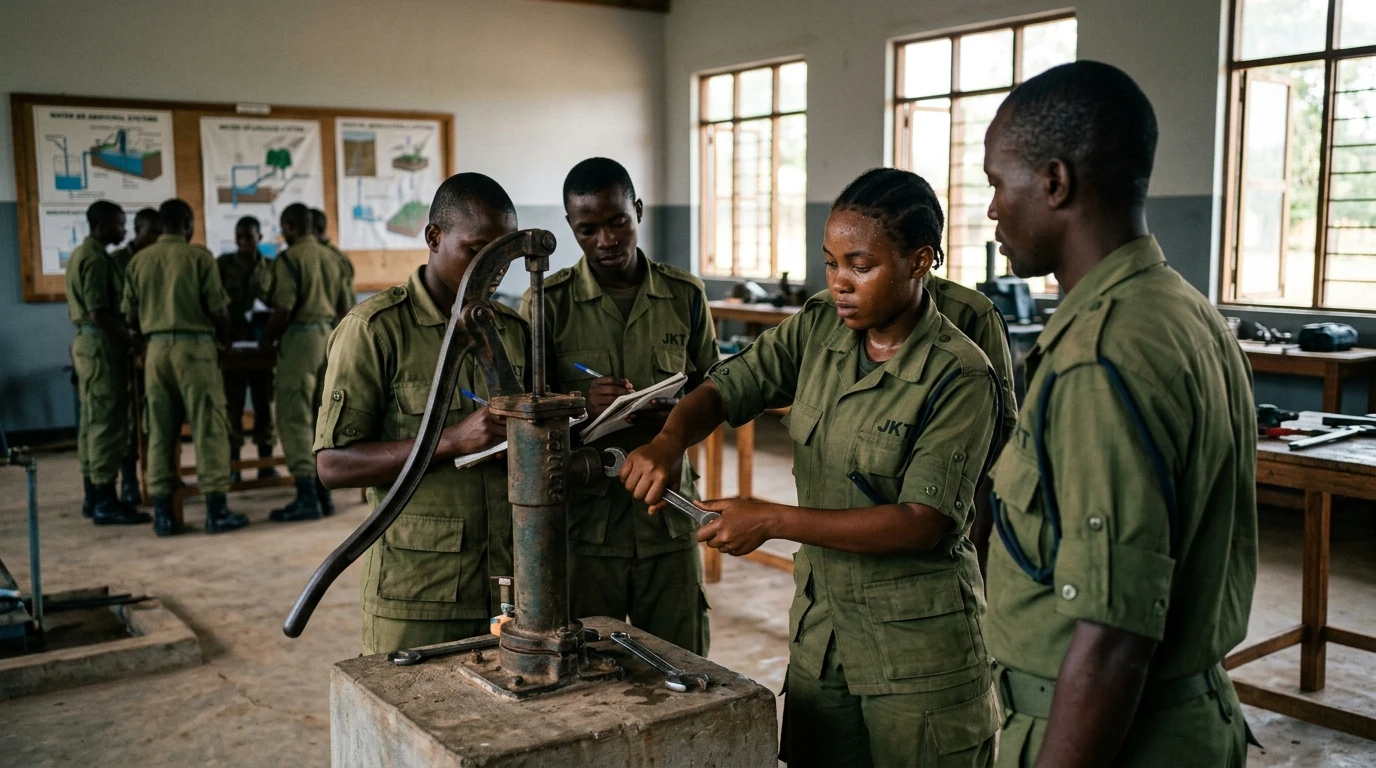
What Happens Inside a JKT Training Camp? A Realistic Look
Let us talk about the part everyone is most curious — and most nervous — about. What does daily life inside a JKT training camp actually look like? The honest answer is: it is tough, structured, and ultimately transformative.
A typical day at JKT camp begins very early — often before sunrise. Wake-up calls at 5:00 AM or even earlier are common. From there, the day is filled with physical exercises, drills, classes, communal activities, and evening reflections. There is very little idle time, and that is entirely intentional. The programme is designed to challenge you physically and mentally, to take you out of your comfort zone, and to teach you what you are genuinely made of.
A Sample Daily Routine at JKT Camp
| Time | Activity |
|---|---|
| 04:30 – 05:00 | Wake-up and preparation |
| 05:00 – 06:30 | Morning physical exercise and parade |
| 06:30 – 07:30 | Personal hygiene and breakfast |
| 07:30 – 12:30 | Drills, military training, or classroom sessions |
| 12:30 – 13:30 | Lunch break |
| 13:30 – 17:00 | Afternoon sessions (civic education, skills training, fieldwork) |
| 17:00 – 18:30 | Free time / sports / social activities |
| 18:30 – 19:30 | Dinner |
| 19:30 – 21:00 | Evening lectures or reflection / self-study |
| 21:00 | Lights out |
Yes, it is a demanding schedule. But here is what former trainees consistently say: after the first two or three weeks, your body adjusts, your mind sharpens, and you begin to feel a quiet pride in what you are enduring and achieving every single day.
Academic and Civics Education During JKT
JKT is not only about physical training. A significant portion of the programme involves structured education. Trainees receive lessons in:
- Tanzanian history and civics – Understanding where the nation came from and where it is headed
- National development policy – The Tanzania Development Vision and its relevance to youth
- Discipline and leadership – Practical lessons in command, teamwork, and responsibility
- Health and wellness education – Including HIV/AIDS awareness and reproductive health
- Vocational skill sessions – Some camps include carpentry, farming, mechanics, and other trade skills

The Emotional Side Nobody Talks About — Homesickness, Fear, and Growth
We want to be real with you here because nobody talks about this part enough. When you arrive at JKT camp for the first time, some of you are going to feel completely overwhelmed. Maybe you have never slept away from home for more than a few nights. Maybe the discipline feels harsh. Maybe you miss your family so much that you cry quietly under your blanket at night while everyone else seems to be managing just fine.
Here is the truth: everyone feels that way. Even the toughest-looking person in your unit. Even the one who walks around with that confident expression and never seems fazed by anything. Inside, they are working through the same adjustment you are. Homesickness, anxiety, and uncertainty are universally human — and they are not signs of weakness. They are signs that you care about your life, your family, and your future.
"The first week I was at Ruvu camp, I cried every night. By the third week, I was leading my unit in morning drills. By the time I left, I didn't recognise myself anymore — and I mean that in the best possible way."
— Baraka Simba, former JKT trainee, now an engineer in Arusha
What JKT does — almost without you noticing — is strip away all the layers of comfort and convenience you have built around yourself, and then it helps you rebuild those layers on a much stronger foundation. The person who walks out of camp after training is not the same person who walked in. And that is exactly the point.
Building Friendships That Last a Lifetime
One of the most underrated gifts of JKT is the community you build. When you train alongside someone through the same gruelling mornings, eat the same meals, laugh through the same awkward military commands, and cheer each other through the same physical exhaustion — you form bonds that are almost impossible to replicate in any other setting.
Many former JKT trainees describe their camp peers as some of the closest friendships of their adult lives. These are people from completely different regions of Tanzania, different ethnic backgrounds, different religions, different ambitions — all united by a shared experience. That, in itself, is a powerful lesson in what it means to be Tanzanian.

JKT Selection Statistics — Understanding the Numbers
Let us look at the data because numbers tell a story that words sometimes cannot. Understanding the scale of JKT selection helps Form Six students realise that they are part of something much bigger than themselves.
Estimated Annual JKT Trainee Distribution by Background
- 🔵 Form Six Leavers (A-Level): ~45% of annual JKT intake
- 🟢 Form Four Leavers (O-Level): ~35% of annual JKT intake
- 🟡 Diploma/Vocational Graduates: ~12% of annual JKT intake
- 🔴 Other Categories (Volunteer/Special): ~8% of annual JKT intake
Source: Ministry of Defence, Tanzania (approximate figures based on available government reports)
What this data tells us is that Form Six students make up the largest single category of JKT trainees each year. This is both a responsibility and an honour. As the most academically advanced group in the intake, Form Six leavers often emerge as natural leaders within their training units — a fact that is recognised and rewarded by camp commanders.
Regional Representation in JKT Selection
JKT selections are intentionally designed to include students from every region of mainland Tanzania. This is not accidental — it is a deliberate policy to ensure that the national service programme promotes cross-regional unity and social cohesion. According to government practice, selections aim to include students from all 26 regions of Tanzania mainland, ensuring that no region is systematically over or underrepresented.
| Region Category | Typical Representation | Key Camps Assigned |
|---|---|---|
| Coastal Regions (Dar es Salaam, Pwani, Tanga) | High volume due to population density | Mgulani, Ruvu |
| Northern Regions (Arusha, Kilimanjaro, Manyara) | Moderate to high | Various northern camps |
| Southern Regions (Mtwara, Lindi, Ruvuma) | Moderate | Nachingwea |
| Western/Central Regions (Dodoma, Singida, Tabora) | Moderate | Makutopora |
| Lake Regions (Mwanza, Kagera, Geita) | Moderate to high | Bulombora, Ngunga |

What Happens After JKT? Your Future Is Not on Hold
Here is the question that keeps most Form Six students awake at night: "If I go to JKT, what happens to my university application? What happens to my career? Am I losing time?"
The answer, delivered with all the honesty and clarity we can offer, is this: You are not losing time. You are investing it. The Tanzanian education and career pathway is structured to accommodate the JKT training period. Here is how the post-JKT journey typically unfolds:
- University Admission for Selected Students: Students who qualify for university admission and are selected for JKT are typically processed through TCU. In many cases, JKT training runs concurrently with the pre-registration period, meaning students return from camp and proceed with their university journey. [LINK: TCU admission process for Form Six leavers]
- Direct Employment Opportunities: Exceptional performers at JKT camps are sometimes identified for direct recruitment into the Tanzania People's Defence Force (TPDF), Tanzania Police Force, or other government security and service institutions.
- Enhanced Employability: The discipline, leadership skills, and teamwork instilled at JKT are qualities that employers — both in the public and private sector — actively look for. JKT training on your CV is not a gap; it is a credential.
- Entrepreneurship and Vocational Paths: For students who do not proceed to university, JKT often provides vocational training that can be the foundation for self-employment and entrepreneurship.
JKT as a Stepping Stone — Not a Stumbling Block
The narrative around JKT in many communities, unfortunately, paints it as something to fear or to avoid. Rumours circulate. Exaggerated stories get passed down from older siblings to younger ones. And so students arrive at the gates of JKT carrying a weight of unnecessary dread.
The reality is far more nuanced and far more positive. Yes, it is physically demanding. Yes, there will be moments of frustration. Yes, you will be woken up before you feel ready. But every single one of those experiences is purposeful. Every drill, every class, every shared meal in the mess hall — it all adds up to a richer, more capable, more resilient version of you.
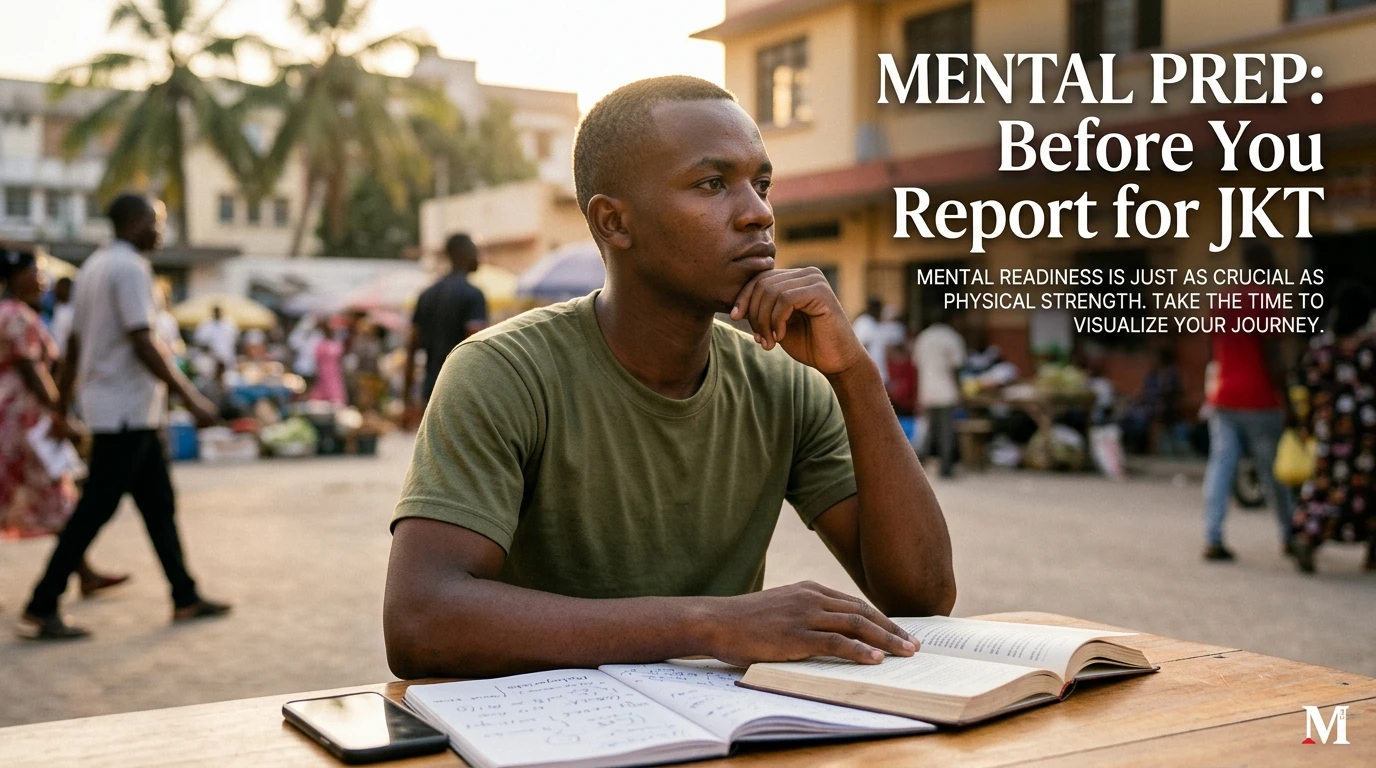
How to Mentally Prepare for JKT Before You Even Get There
Mental preparation is the most underrated part of getting ready for JKT. Every student packs their bag. Far fewer students pack their mind. Here are the mindset shifts and practical mental preparation strategies that will make your JKT experience significantly smoother:
1. Release the Victim Mentality
This might sound direct, but it is said with genuine care. If you go to JKT with the attitude that something terrible is happening to you, you will suffer unnecessarily. JKT is happening for you. Shift from "I have to do this" to "I get to do this." The students who thrive at JKT are almost always the ones who decide early on to be fully present and fully engaged.
2. Set Personal Goals for Your Time at Camp
Before you even pack your bag, sit down and ask yourself: What do I want to get out of this experience? Do you want to improve your physical fitness? Develop leadership skills? Learn self-discipline? Make friends from different regions? Having intentional goals transforms JKT from something that is happening to you into something you are actively shaping and directing.
3. Talk to Someone Who Has Been Through It
There is no substitute for a real conversation with someone who has genuinely completed JKT training. Ask them the hard questions. Let them tell you about the difficult moments. And then listen carefully to what they say about how they got through those moments. You will almost always find that the story ends with growth, not defeat.
4. Write Letters — To Yourself and To Your Family
This may sound old-fashioned, but it works. Write a letter to yourself before you go — about who you are right now, what you hope to become, and what you promise yourself you will do with this experience. Seal it and open it when you come back. You will be amazed at the distance you have travelled. Write to your family too. Communication from camp lifts your spirit and theirs simultaneously.
Advice Specifically for Female Students Selected for JKT
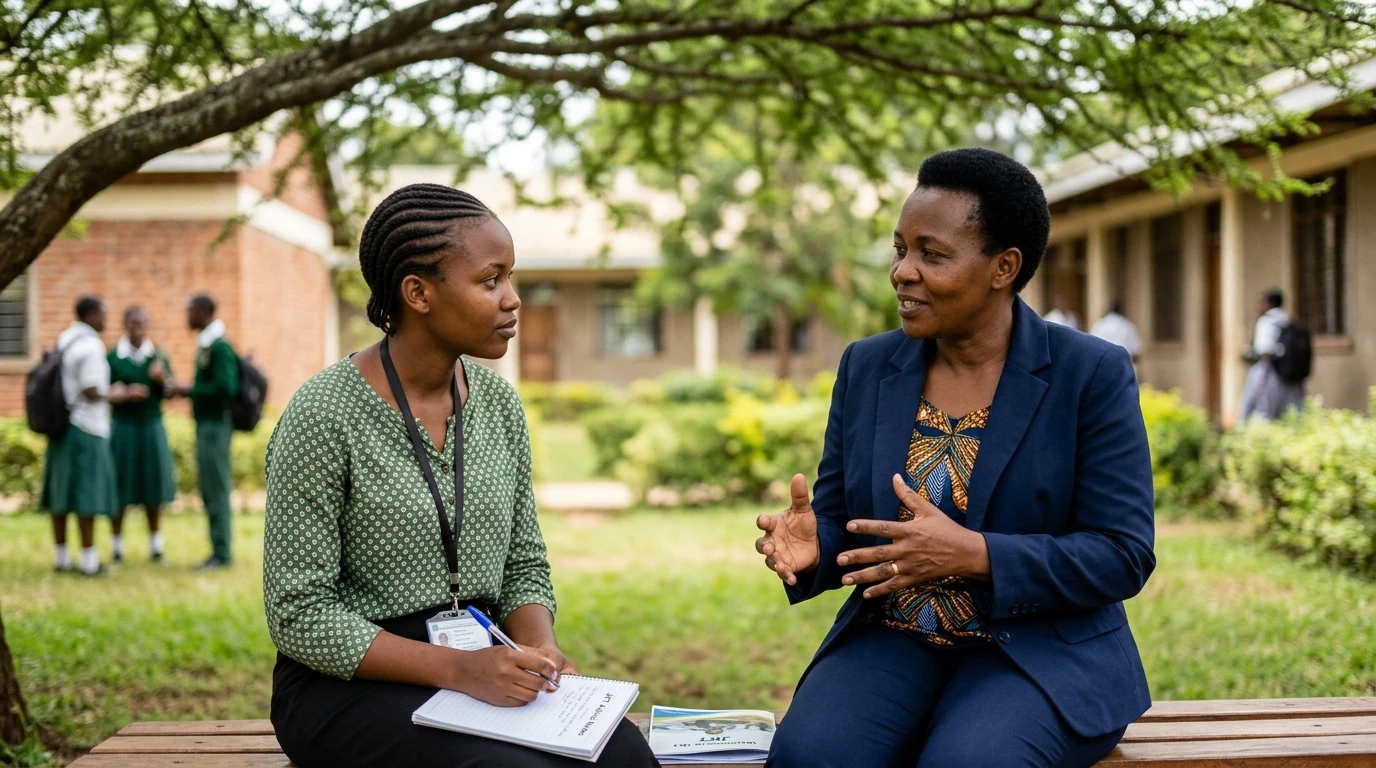
Female Form Six students sometimes feel the most apprehensive about JKT selection, and it is completely understandable. The questions and concerns are very real: Will I be safe? Will I be treated with respect? How does the physical training account for gender differences? What about my personal hygiene needs?
Here is what you need to know — and what no one says clearly enough: JKT camps have female units, and female trainees are supervised by female officers. The training standards are adapted appropriately, and the welfare of female trainees is taken seriously within the institution. Women who have completed JKT consistently report that the experience made them tougher, more self-assured, and significantly more respected — by others and by themselves.
"I was the only girl in my family who was selected for JKT. My mother cried when I left. She was worried. But when I came back, she said she could see something different in my eyes — something stronger. I could see it too."
— Aneth Kimaro, Form Six leaver from Kilimanjaro Region
Practical advice for female trainees: Carry adequate sanitary supplies, invest in sturdy and comfortable footwear, and do not hesitate to speak to your female supervising officers if you have welfare concerns. You have rights within the JKT system, and those rights are there to be used.
The Role of Parents and Families in Supporting JKT Trainees
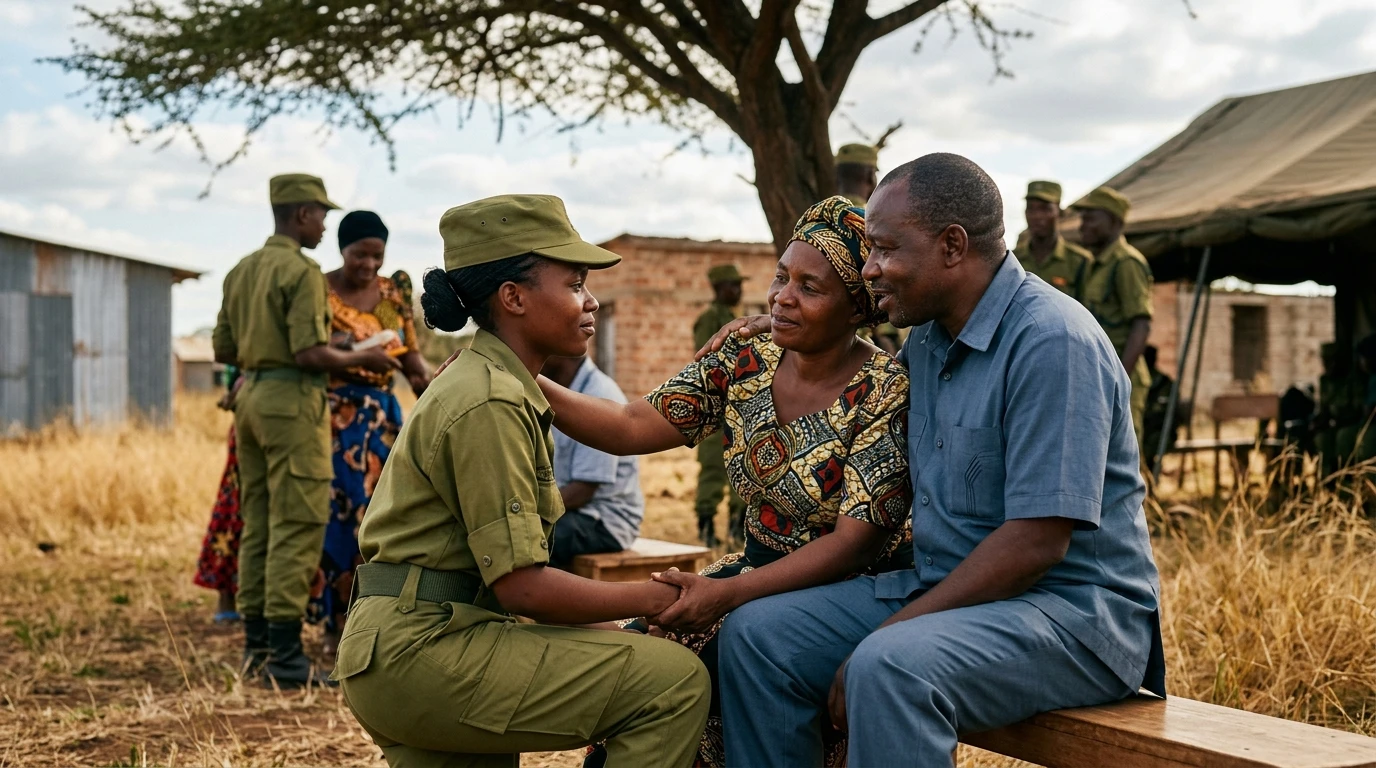
If you are a parent reading this, first of all — your concern for your child is completely natural and completely beautiful. The love you feel is exactly why you are here reading this at all. So let us speak to you directly for a moment.
Your child's JKT selection is not a crisis. It is a milestone. Tanzania has entrusted your son or daughter with a national responsibility, and that is something to be proud of, not afraid of. The most important thing you can do as a parent right now is not to panic — because your child will pick up on your energy. If you approach JKT with fear, they will carry that fear into camp. If you approach it with pride and encouragement, they will carry that instead.
How Families Can Stay Connected During JKT Training
- Letters and written communication – Many camps allow and even encourage letter writing. This remains one of the most meaningful forms of connection during training.
- Designated visiting days – Some camps allow family visits on specified dates. Check the official communication from your child's camp for details.
- Prayer and spiritual support – Do not underestimate the power of knowing that your family is praying for you and thinking about you every day.
- Preparing a warm welcome – Plan something meaningful for when your child returns. That anticipation keeps trainees going through the tough days.
Common Myths About JKT Selection — Debunked Once and For All
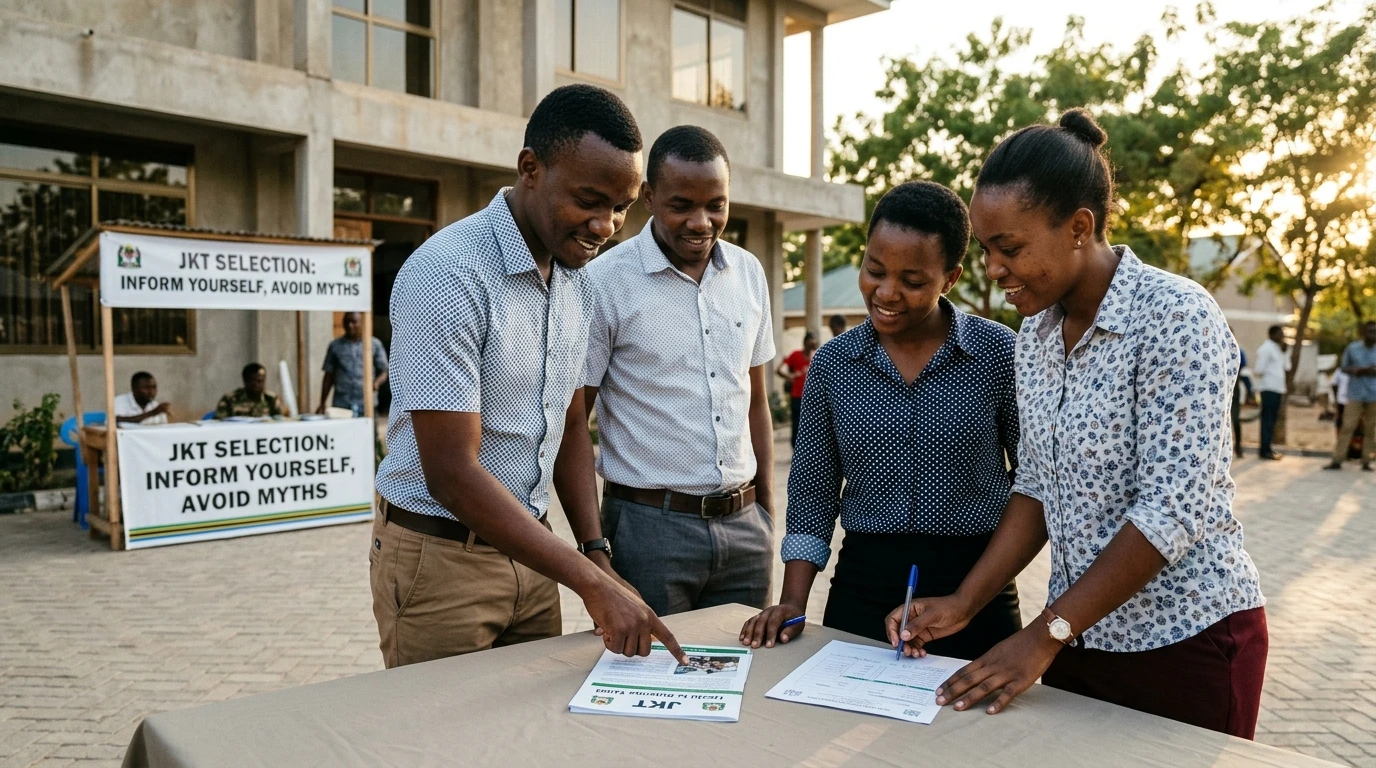
No conversation about JKT selection for Form Six students is complete without addressing the myths and misconceptions that circulate in schools, families, and social media every single year. These myths cause unnecessary panic, poor decisions, and in some cases, students actually flee from a process that could genuinely benefit them. Let us clear the air.
| The Myth | The Truth |
|---|---|
| "JKT selection means you failed to get into university." | Completely false. Many students selected for JKT also qualify for university admission. JKT training and university pathways are separate processes managed by different bodies — and both can happen in the same academic season. |
| "You can bribe your way out of JKT selection." | Not only is this false, it is dangerous. Attempting to bribe government officials is a criminal offence under Tanzanian law. Any person claiming to offer JKT exemptions in exchange for money is a fraudster and should be reported to the Prevention and Combating of Corruption Bureau (PCCB). |
| "JKT is only for students who performed poorly in their exams." | Selection is not based solely on academic performance. Strong students, average students, and those with various results can all be selected. JKT draws from the full spectrum of Form Six graduates to build a diverse and representative cohort. |
| "The physical training at JKT is dangerous and can injure you." | JKT training is physically demanding but medically supervised. All trainees undergo medical clearance before training begins, and camp medical facilities are available for injuries or illness. The training is designed to build strength progressively — not to break people. |
| "If you are selected for JKT, your life is on pause for years." | Standard JKT training for Form Six leavers typically lasts between three and six months — not years. After training, trainees return to civilian life, university, or employment with their futures fully intact. |
| "Female students are treated poorly at JKT." | Female trainees are placed in dedicated female units with female commanding officers. Welfare concerns are handled through proper channels, and the institution has codes of conduct that govern the treatment of all trainees regardless of gender. |
The persistence of these myths is frustrating precisely because they cause real harm. Students have been known to go into hiding to avoid JKT reporting, only to face legal consequences and miss out on an experience that could have significantly shaped their lives for the better. Knowledge is always more powerful than rumour — and now you have the knowledge.
How JKT Training Compares to National Service Programmes Across Africa
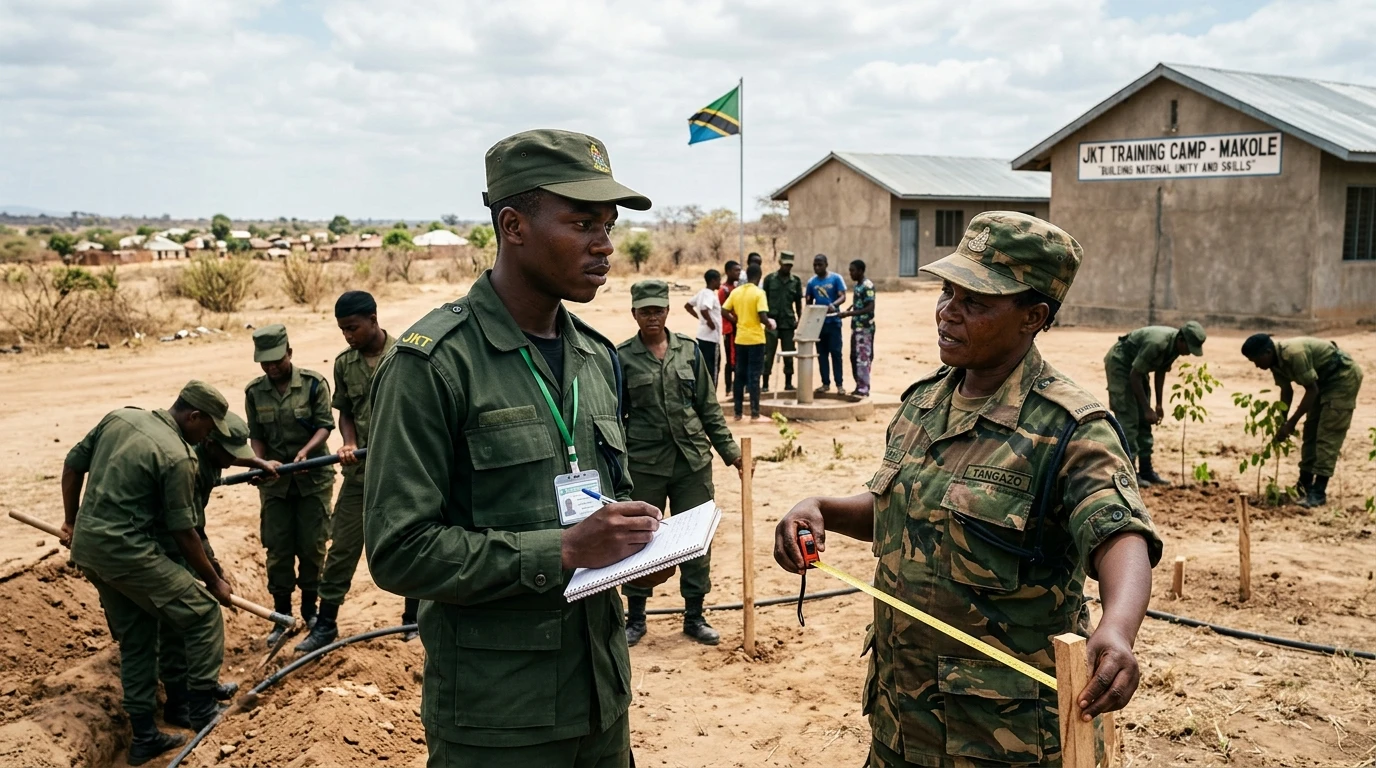
Tanzania is far from alone in running a structured national service programme for its youth. Across the African continent, governments have long recognised that channelling the energy, idealism, and potential of young people into structured national service produces dividends that extend far beyond the individuals themselves. A brief comparison helps contextualise just how significant — and how well-regarded — Tanzania's JKT programme actually is.
| Country | Programme Name | Duration | Key Focus |
|---|---|---|---|
| Tanzania | JKT (Jeshi la Kujenga Taifa) | 3–6 months (Form Six leavers) | Military discipline, civic education, vocational skills, national unity |
| Nigeria | NYSC (National Youth Service Corps) | 12 months | Community development, cross-cultural integration, professional service |
| Ghana | National Service Scheme (NSS) | 12 months | Professional placement in public and private institutions |
| Kenya | National Youth Service (NYS) | Varies (voluntary and selective) | Skills training, paramilitary readiness, community service |
| Rwanda | Itorero/Ingando | 1–3 months | Civic education, national identity, post-genocide reconciliation values |
What stands out about Tanzania's JKT programme — and what often goes unappreciated by those who fear it most — is its strong emphasis on both military discipline and civic education simultaneously. Unlike programmes that lean purely toward professional placement (as in Ghana's NSS) or purely toward community service, JKT builds the whole person: physical, intellectual, social, and patriotic. That balance is rare, and it is valuable.
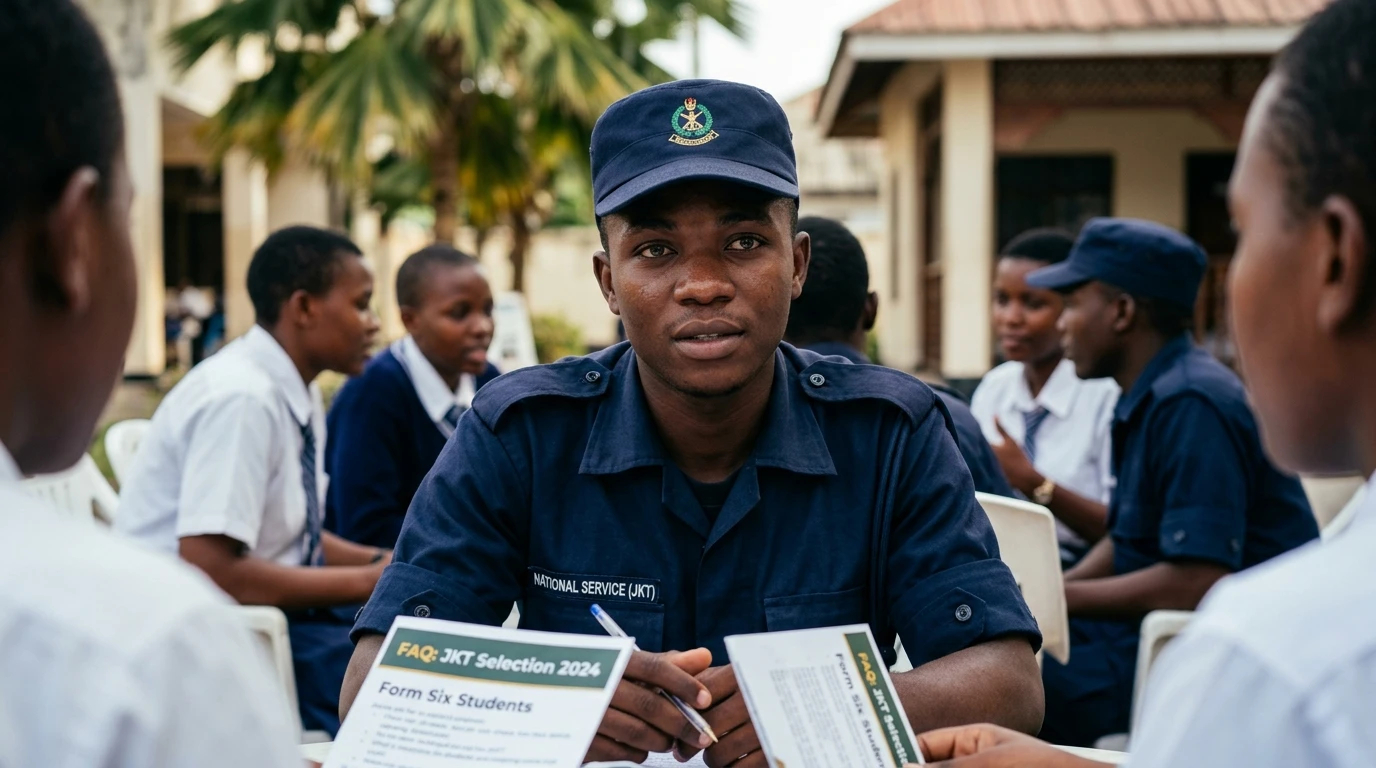
Frequently Asked Questions About JKT Selection for Form Six Students
Over the years, the same questions come up again and again from Form Six students, parents, and teachers. Here are the most important ones — answered honestly, clearly, and completely.
Can a Form Six Student Defer JKT Selection Due to University Admission?
This is one of the most common questions and the answer requires nuance. In some cases, students who have been offered university placement may be granted a deferment or may have their JKT participation scheduled around their academic calendar. However, this must be handled through official channels — through your school, the Ministry of Education, or directly with the relevant JKT administration. Do not assume deferment is automatic. Follow the official process and document everything.
What If I Have a Medical Condition That Prevents Me From Completing Physical Training?
JKT has provisions for students with documented medical conditions. During the initial medical screening at camp, trainees with pre-existing conditions are assessed by medical personnel. Depending on the severity and nature of the condition, adjustments may be made to your training programme or, in rare cases, a medical exemption may be considered. Always bring your medical records and a letter from your doctor when you report to camp. Never attempt to hide a medical condition — it is in your own best interest to disclose it properly.
Will JKT Training Affect My University Application or Admission Process?
The Tanzania Commission for Universities (TCU) and the government are aware of the JKT selection cycle and structure the admissions calendar accordingly. In most cases, your JKT participation does not disqualify you from university admission — in fact, completing JKT can strengthen your standing as a candidate by demonstrating discipline and national service. Always keep copies of your JKT completion certificate, as it may be required as part of your university registration documentation.
Is There Any Way to Voluntarily Apply for JKT If You Were Not Selected?
Yes. Tanzania does allow for voluntary enlistment into JKT and the TPDF more broadly. Young Tanzanians who were not automatically selected but wish to undergo training can make inquiries through regional JKT offices or the Ministry of Defence. Voluntary applicants must meet the same eligibility criteria as selected students and are subject to the same medical and civic screening.
What Happens If I Fail to Report to JKT Camp Without a Valid Reason?
This is a question that deserves a very direct answer. Failing to report to JKT camp after being officially selected, without a legitimate and documented reason, is a serious matter. Under the National Service Act of Tanzania, selected individuals are legally obligated to comply with their reporting instructions. Students who fail to report without valid cause may face official consequences, including being barred from certain government services or future public sector employment opportunities. If you have a genuine reason why you cannot report — whether medical, family emergency, or otherwise — communicate this immediately through your school or directly to the relevant government office. Do not simply disappear. Silence always makes the situation worse, never better.
Are There Phones Allowed at JKT Camp?
This varies from camp to camp and from cohort to cohort. Some camps restrict or prohibit personal mobile phone use during training, particularly in the early weeks when the focus is on full immersion into the training environment. Others allow limited phone access during designated free periods. The safest approach is to arrive prepared for limited communication and treat any phone access as a welcome bonus rather than a guaranteed right. This mental preparation will save you significant frustration if restrictions are in place at your assigned camp.
Can Students From Zanzibar Be Selected for JKT?
It is important to note that JKT national service, as administered under the mainland Tanzania government framework, primarily applies to students from Tanzania mainland. Zanzibar operates under its own semi-autonomous government structure, and Zanzibari students have a separate national service arrangement through the Zanzibar government. Zanzibari Form Six leavers should consult the Zanzibar Ministry of Education for guidance specific to their situation rather than assuming the same process applies to them as mainland students.
Life After JKT — Real Stories of Transformation From Across Tanzania
Perhaps the most compelling case for JKT — more powerful than any statistics, any government policy document, or any expert analysis — is the lived experience of the hundreds of thousands of Tanzanians who have walked through its gates and emerged changed. These are not exceptional people. They are ordinary young Tanzanians, just like you, who found something extraordinary within themselves when the circumstances demanded it.
Here are a few of their stories, shared in their own words, representing different regions, different backgrounds, and different destinations — but all connected by the same formative experience.
Emmanuel Msigwa — From Doubting Student to Army Officer
Emmanuel grew up in Tabora, the sixth child in a family of eight. He describes himself before JKT as someone who "had no direction and a lot of excuses." He was selected for JKT after his Form Six results and went to camp convinced it would be a waste of his time.
"By the fourth week, everything changed. My commanding officer pulled me aside and told me I had leadership instincts I had never been asked to use before. Nobody had ever said that to me in my entire life." Emmanuel stayed connected to the TPDF after completing his training, eventually pursuing a full military career. Today he holds the rank of Lieutenant and trains incoming JKT cohorts at a camp in Morogoro. "I am now on the other side," he says with visible pride, "and I see every young person who walks through those gates the way my officer saw me. Full of potential they do not yet know they have."
Fatuma Rashidi — From Fear to Fearlessness
Fatuma, from Mtwara, was raised in a deeply conservative household where the idea of a young woman going to a military training camp was met with considerable family anxiety. She remembers her grandmother weeping the morning she left and begging her to find a way to be exempted.
"I went carrying everyone's fear on top of my own. But what I found at camp was something nobody had prepared me for — a version of myself that was not afraid." Fatuma completed her JKT training and subsequently gained admission to Muhimbili University of Health and Allied Sciences. She graduated as a registered nurse and today works in a district hospital in Mtwara, the same town she grew up in. "When people in my community see me now," she reflects, "they understand that JKT did not take something from me. It gave me something I could never have found sitting at home waiting for life to happen."
Daniel Mrema — Entrepreneurship Born in the Barracks
Daniel, from Kilimanjaro, had always been more interested in business than in books. He completed his Form Six with average results and was selected for JKT with no particular expectation of what the experience would mean for him. What he found at camp was a vocational carpentry programme that ignited something he had never connected with in a classroom.
"In camp, I made my first piece of furniture with my own hands. A simple wooden stool. But I remember holding it up and thinking — I built this. I can build things." After completing his training, Daniel enrolled in a technical vocational programme in Moshi, and within three years of completing that programme, he had established his own small furniture workshop employing four people from his neighbourhood. He credits the JKT vocational sessions with giving him both the skill and the confidence to believe that his hands, not just his academic certificates, could build a future.
The Bigger Picture — What JKT Means for Tanzania's Future
Step back for a moment from the personal and the individual. Zoom out to the national level. Because JKT is not only about any single student's journey — it is about what happens when an entire generation of young Tanzanians goes through a shared formative experience and emerges on the other side with a common language of discipline, service, and national identity.
Tanzania is a country of extraordinary diversity. It is home to more than 120 ethnic groups, multiple religions, and vast geographic variation — from the Indian Ocean coastline to the peaks of Kilimanjaro, from the shores of Lake Victoria to the southern highlands. Keeping a nation this diverse united, forward-moving, and mutually respectful is not an accident. It requires intentional investment in shared experiences and shared values. JKT is one of the most important such investments the Tanzanian state has ever made.
When a young woman from Mtwara shares a training unit with a young man from Kagera, and they struggle through the same morning drill and eat at the same table and laugh at the same commanding officer's dry sense of humour — something is built between them. Something that no amount of classroom civics education can fully replicate. That is the deeper purpose of JKT, and it is a purpose worth taking seriously.
President Julius Nyerere, whose Ujamaa philosophy gave birth to JKT in 1963, understood something that remains profoundly true more than six decades later: a nation is only as strong as the bonds between its people. Every Form Six student who reports to JKT camp and completes their training is, in a very real and meaningful sense, adding a thread to the fabric that holds Tanzania together. That is not a small thing. That is nation-building — and it starts with you.
Final Words — To Every Form Six Student Reading This Right Now
You have read through everything we have laid out here — the facts, the process, the daily reality, the myths, the stories, the statistics. And now we want to close with something simple and direct, spoken not as writers on a website, but as people who genuinely care about what comes next for you.
If you have been selected for JKT, or if you are waiting to find out whether you will be — know this: the experience ahead of you is one that countless Tanzanians before you have faced with fear and completed with pride. The path through JKT is not easy. Nobody who has walked it would tell you it is. But nobody who has walked it would trade the experience away either. That is the truth that matters most.
You are stronger than you think you are. More capable than your nervousness is currently allowing you to believe. The version of you that walks out of JKT camp at the end of training will look back at the version of you reading this right now and smile — not with contempt, but with understanding. Because that version of you will know, from lived experience, what genuine resilience feels like from the inside.
So pack your bag carefully. Say your goodbyes with love, not dread. Walk through those camp gates with your chin up and your mind open. And when the mornings are hard — and some of them will be genuinely hard — remember why you are there. Remember what is being built inside you, day by day, drill by drill, meal by meal, friendship by friendship.
Tanzania needs young people who know who they are, what they stand for, and what they are capable of contributing. JKT is one of the most powerful tools this nation has ever built for producing exactly those kinds of young people. And now it is your turn to become one of them.
"The nation does not belong to the government. It belongs to the people — and the people are built, one young citizen at a time."
— Inspired by the founding vision of Mwalimu Julius K. Nyerere
We wish every Form Six leaver reading this article the very best as they navigate this chapter of their journey. You are ready. Tanzania believes in you. Now it is time to believe in yourself.
- How TCU University Admissions Work for Form Six Leavers in Tanzania
- NECTA Form Six Results — How to Read and Understand Your ACSEE Results Slip
- Top Career Paths for Form Six Graduates in Tanzania: A Complete Guide
- JKT Training Camps in Tanzania — Locations, Contacts, and What to Expect
- Tanzania Youth Employment Opportunities After Form Six: Your Full Options Guide
Quick Reference: JKT Selection FAQs at a Glance
For readers who need fast answers without reading through the full article, here is a concise summary of the most frequently searched questions about JKT selection for Form Six students in Tanzania.
| Question | Quick Answer |
|---|---|
| What does JKT stand for? | Jeshi la Kujenga Taifa — Tanzania's National Service Army, established in 1963 |
| How long is JKT training for Form Six students? | Typically 3 to 6 months, depending on the cohort and government planning cycle |
| Is JKT selection compulsory? | Yes, for students who are officially selected. Failure to report without valid reason has official consequences |
| Will JKT affect my university admission? | No — TCU and government bodies coordinate the calendar to accommodate JKT training periods |
| Is JKT selection free? | Yes — completely free. Anyone demanding payment is a fraudster. Report them to the PCCB immediately |
| Are female trainees safe at JKT camps? | Yes — female trainees are placed in dedicated units supervised by female officers with established welfare protocols |
| Can I defer JKT if I get a university place? | Possibly — but only through official channels. Never assume deferment is automatic |
| What do I bring to JKT camp? | National ID, selection letter, toiletries, sturdy footwear, light bedding, basic stationery, and any prescribed medication with a doctor's letter |
| How do I know if I have been selected for JKT? | Through your school notice board, official government portals, national media announcements, and Ministry of Education communications |
| What are the main JKT camps in Tanzania? | Mgulani, Ruvu, Makutopora, Bulombora, Nachingwea, and Ngunga, among others across all regions |
For the most current and authoritative information on JKT selection dates, reporting instructions, and camp assignments, always refer to official communications from the Tanzania Ministry of Defence, the Ministry of Education, Science and Technology, and your school administration. Do not rely on social media rumours or unverified WhatsApp messages for information that directly affects your future.
How JKT Training Has Evolved Over the Decades — From 1963 to Today
One of the most fascinating — and least discussed — aspects of JKT is how significantly the programme has evolved since its founding in 1963. Understanding this evolution matters because it tells you something important: JKT is not a relic of the past being imposed on a modern generation. It is a living institution that has continuously adapted to the changing needs of Tanzania and the changing realities of Tanzanian youth. The JKT selection for Form Six students you are navigating today is part of a long, deliberate, and continuously improving national project.
In the early years of independence, JKT training was heavily influenced by the Cold War geopolitical environment. Tanzania received military advisory support from a range of international partners, and the training curriculum reflected the nation-building priorities of a newly independent African state finding its footing on the world stage. The emphasis was almost entirely on military readiness and physical conditioning — civic education was present, but the programme was considerably more paramilitary in character than it is today.
By the 1970s and 1980s, as Tanzania's Ujamaa policy deepened its influence on national institutions, JKT began integrating agricultural and vocational components more meaningfully. Trainees were assigned to assist with national development projects — road clearing, agricultural cultivation, construction support — reflecting the collectivist values of the era. This was the period during which JKT earned its reputation as a true "nation-building army" in the most literal and practical sense of the phrase.
The post-liberalisation era of the 1990s and early 2000s brought structural adjustments to the programme as Tanzania transitioned toward a market economy and engaged more deeply with global development frameworks. Civic education components were modernised to reflect contemporary democratic values, health education — including HIV/AIDS awareness — was integrated into the standard curriculum, and the vocational skills component was expanded to include trades relevant to a diversifying Tanzanian economy.
What Has Changed Most Noticeably in Recent Years
Former trainees who completed JKT in the 1980s or 1990s and speak to today's Form Six leavers often note several significant differences in how the programme now operates compared to their own experience. Some of the most frequently mentioned changes include:
- Improved camp infrastructure: Many JKT camps have received sustained investment in accommodation, sanitation, and medical facilities over the past two decades. Living conditions, while still demanding by civilian standards, are considerably more structured and welfare-conscious than they were in earlier generations.
- Expanded health and wellness programming: Modern JKT training includes comprehensive health education components, mental health awareness sessions in some cohorts, and more robust medical screening at entry.
- Greater gender consideration: The integration of female trainees into JKT has been progressively formalised, with dedicated female officer corps, gender-specific accommodation, and welfare protocols that reflect Tanzania's evolving commitments to gender equality.
- Stronger links to post-training pathways: Coordination between JKT administration, TCU, and employers has improved, meaning the transition from camp back to civilian education or employment is better managed than it once was.
- Technology and communications: While mobile phone policies vary by camp and cohort, the broader integration of digital communication tools into Tanzanian life has influenced how camps manage information flow between trainees and their families.
The Role of Schools and Teachers in Preparing Students for JKT Selection
If you are a teacher, a school administrator, or a Form Six coordinator reading this, this section is written directly for you — because the role that educators play in shaping how students experience and respond to JKT selection is far greater than most schools formally acknowledge.
In many Tanzanian secondary schools, the conversation about JKT is either rushed, incomplete, or avoided altogether in favour of more immediately pressing academic priorities. This is understandable — the Form Six curriculum is demanding, and examination preparation dominates the final year calendar. But the result of this gap in preparation is that students receive their JKT selection notices having never been given accurate, balanced, and encouraging information about what awaits them. The myths fill the vacuum. The fear takes hold. And students arrive at camp carrying burdens they never needed to carry.
Schools that take the time to formally prepare their Form Six students for the post-examination landscape — including JKT, university admissions, vocational pathways, and employment — produce graduates who navigate these transitions with significantly more confidence and composure. This is not speculation. It is consistently reported by school administrators in regions where structured post-Form-Six orientation programmes are embedded into the school calendar.
Practical Steps Schools Can Take Right Now
- Invite former JKT trainees as guest speakers: There is no more powerful antidote to JKT myths than the honest, firsthand testimony of a former trainee who sits in front of students, answers their questions directly, and shares both the difficulties and the rewards without dramatisation in either direction.
- Incorporate a post-Form-Six orientation session into the school calendar: A single dedicated session covering JKT, TCU admissions, NACTE vocational pathways, and employment options would dramatically improve student readiness. This does not need to be lengthy — even a well-structured two-hour session with accurate, current information changes outcomes.
- Display official JKT information prominently: School notice boards should carry accurate information about the JKT selection process, reporting requirements, and official contact channels. This reduces misinformation and ensures students know where to find legitimate guidance.
- Maintain active communication with parents: The anxiety around JKT is often as intense among parents as it is among students themselves. Schools that communicate proactively with parents — through meetings, letters home, or parent WhatsApp groups — create a more supportive transition environment for the entire student community.
- Connect students with school alumni who have completed JKT: Building a mentorship pipeline between current Form Six students and former students who have successfully navigated JKT and gone on to university or employment creates a culture of informed confidence rather than uninformed fear.
"When I told my Form Six students that JKT was where I learned to be a leader, not where my life ended, I could see something shift in the room. They had never heard a teacher say that before. That conversation cost us forty-five minutes of lesson time. The confidence it built in those students was worth far more."
— Senior teacher, national secondary school, Dodoma Region (name withheld on request)
JKT and Tanzania's Vision 2050 — Why Youth Development Is a National Priority
No conversation about JKT in the modern Tanzanian context is complete without situating it within the country's broader national development ambitions. Tanzania is currently working toward the goals set out in its Tanzania Development Vision 2050, a long-term strategic framework that identifies human capital development — particularly among youth — as one of the most critical pillars of sustainable national prosperity.
According to the United Nations Population Fund (UNFPA), Tanzania has one of the youngest populations on the African continent. As of the most recent national census data, approximately 60 percent of Tanzania's population is under the age of 25 (UNFPA Tanzania Country Profile, 2022). This demographic reality is simultaneously Tanzania's greatest challenge and its greatest opportunity. A large, young population can be either an engine of national growth or a source of social instability — the difference lies almost entirely in how effectively that youth population is educated, skilled, and oriented toward productive contribution.
JKT sits squarely within this developmental framework. It is not an outdated military relic. It is an active instrument of Tanzania's human capital strategy — one that develops disciplined, civically aware, physically capable young citizens who are ready to contribute to the economy and society in meaningful ways.
What this means in plain language is that every shilling Tanzania invests in JKT training — in the camps, the instructors, the curriculum, the facilities — returns more than it costs in the form of more productive, more disciplined, more employable citizens. And every Form Six student who walks through the JKT gates is not just receiving that investment. They are becoming it.
Tanzania's Vision 2050 specifically identifies the need to produce a generation of young people who are not merely academically qualified but who possess what development economists call soft skills — leadership, resilience, teamwork, communication, and a strong civic identity. These are precisely the qualities that JKT has been building into young Tanzanians since 1963. The programme was ahead of its time when Nyerere founded it, and it remains ahead of the curve today.
JKT as a Bridge Between Education and the Labour Market
One of the persistent structural challenges facing Tanzanian graduates — at Form Six level and beyond — is the gap between what the formal education system produces and what employers actually need. Academic qualifications are necessary but not sufficient in a competitive labour market. Employers in both the public and private sector consistently report that they are looking for candidates who can follow instructions with precision, work effectively under pressure, operate within team structures, and demonstrate personal discipline and reliability.
These are not qualities that are easily taught in a conventional classroom. They are qualities that are forged through experience — through being genuinely tested and genuinely challenged. JKT provides exactly that testing ground. A Form Six leaver who has completed JKT training arrives at a job interview with a credential that is qualitatively different from a certificate. They arrive with a demonstrated ability to endure, adapt, and perform under conditions that most of their peers have never faced.
Tanzanian employers who recruit among Form Six and university graduates frequently cite JKT completion as a positive signal in a candidate's profile — not because of what it represents militarily, but because of what it communicates about character. That signal has real economic value, and it belongs to every trainee who earns it.
Understanding Your Rights and Responsibilities as a JKT Trainee
This is a section that very few guides on JKT selection ever include — and it may be one of the most important things you read before you report to camp. Understanding your rights as a JKT trainee is not an act of defiance or resistance. It is an act of informed citizenship, and it is entirely consistent with the values that JKT itself is designed to instil.
JKT operates within the framework of Tanzanian law, and that legal framework protects trainees even within a structured military training environment. Knowing your rights does not make you a difficult trainee. It makes you a responsible one.
What You Are Entitled to as a JKT Trainee
- Medical care: You are entitled to access to medical facilities and treatment for illness or injury sustained during training. If you are unwell, you have the right — and the responsibility — to report your condition to medical personnel. Concealing a medical condition out of fear of appearing weak can have serious consequences for your health.
- Freedom from physical abuse: Authorised physical training, however demanding, is part of the programme. Physical abuse, harassment, or assault by officers or fellow trainees is not authorised and is not acceptable. If you experience or witness such conduct, you have the right to report it through the proper complaint channels within the camp structure.
- Religious observance: Tanzanian law protects the right to religious practice, and JKT camps generally accommodate religious observance within the constraints of the training schedule. Speak to your unit commander early about your religious requirements so that reasonable accommodations can be identified.
- Communication with family: While communication may be restricted during certain phases of training, you retain the right to communicate with your family, particularly in cases of genuine family emergency. Camp administration has protocols for handling urgent family communications.
- Proper nutrition: Trainees are entitled to receive adequate nutrition to support the physical demands of the programme. If you have documented dietary restrictions or medical nutritional requirements, these should be communicated to camp medical and catering staff upon arrival.
What Is Expected of You in Return
Rights exist within a framework of mutual responsibility. In the same way that JKT is obligated to treat you with dignity and care, you are obligated to bring your full commitment, your respect for authority, and your genuine effort to the training environment. The responsibilities expected of every JKT trainee include:
- Following the lawful instructions of commanding officers promptly and without deliberate insubordination
- Treating fellow trainees with respect regardless of regional origin, religion, or gender
- Reporting to all scheduled activities on time and in the correct uniform or attire
- Maintaining the cleanliness and order of your living and training spaces
- Refraining from bringing prohibited items into camp — including alcohol, non-prescribed substances, or unauthorised electronic devices
- Reporting any safety concerns, including knowledge of prohibited conduct by others, through appropriate channels
Navigating the Transition Back to Civilian Life After JKT
Interestingly, one of the challenges that receives almost no attention in conversations about JKT is the experience of returning to civilian life after training. This transition is rarely discussed, but it matters more than most people realise. After three to six months of highly structured, communal, physically demanding living, returning to the relative freedom and unstructured pace of civilian life can feel genuinely disorienting for some trainees — a phenomenon that psychologists studying military and paramilitary programmes sometimes refer to as re-entry adjustment.
This is not a sign that something went wrong. It is a sign that something went very right. If your time at JKT changed you meaningfully — if you are returning as a different, more disciplined, more self-aware person than the one who left — then of course the world you are returning to will feel slightly different than it did before. You are seeing it through new eyes.
Practical Tips for a Healthy Post-JKT Transition
- Give yourself time to adjust: Do not expect to snap immediately back into your pre-JKT routines and mindset. Allow yourself a week or two of genuine decompression before diving into university registration, job applications, or major life decisions.
- Stay connected with your JKT peers: The friendships you built at camp are among the most valuable things you are bringing home. Maintain those connections actively. A group of people who shared your JKT experience understands something about you that no one else in your civilian life fully does.
- Apply the discipline immediately: The biggest risk of returning from JKT is losing the discipline in the comfort of home. The early morning wake-ups, the structured day, the physical activity — these habits are assets. Build them into your civilian routine from day one rather than allowing them to erode.
- Document your experience professionally: Update your CV, your academic applications, and your personal profiles to include your JKT training. Frame it accurately and proudly — as a national service programme focused on leadership, discipline, civic education, and vocational skills. That framing communicates exactly what employers and universities need to know.
- Talk openly about the hard parts: If you found aspects of the training genuinely difficult — emotionally, physically, or socially — talking about those experiences with people you trust is healthy and important. There is no honour in pretending JKT was easier than it was. The difficulty is part of what makes the achievement meaningful.
"The strangest thing about coming home from JKT was that my own bedroom felt too quiet. I had spent four months surrounded by people, noise, and purpose every single hour of the day. Suddenly I was alone with nothing scheduled and no one calling me to formation. It took about two weeks before I found my rhythm again. But the rhythm I found was better than the one I had before I left."
— Gerald Nkwabi, former JKT trainee, currently enrolled in civil engineering at the University of Dodoma
Conclusion: Your JKT Journey Starts With the Right Information
The JKT selections for Form Six students 2026 represent far more than a government requirement — they mark a defining chapter in every young Tanzanian's journey toward citizenship, discipline, and national identity. Understanding the process fully puts you ahead of the confusion that catches many students off guard each year.
To recap what every Form Six leaver and parent must remember: the JKT selection process is centrally managed and non-negotiable for eligible students, meaning preparation and early awareness are your greatest tools. Medical fitness, proper documentation, and timely reporting to your assigned camp are the three pillars that determine a smooth transition. Missing any step can result in delays that affect your university placement timeline — a consequence no student can afford.
Furthermore, JKT training is increasingly recognised by employers and higher learning institutions as a marker of discipline and commitment. Students who approach it with a positive mindset often emerge with leadership skills, physical resilience, and professional networks that serve them for decades.
✅ Key Takeaways
- JKT selection is mandatory for eligible Form Six graduates — non-compliance has academic consequences.
- Documentation must be prepared early — birth certificates, school certificates, and medical reports are non-negotiable.
- Assigned camp reporting dates are strict — late arrivals risk losing their placement entirely.
- JKT training builds real-world value — employers and universities recognise its disciplinary merit.
- Official announcements come through NECTA and government portals — avoid misinformation from unverified sources.
Take action today: Download your official JKT selection results directly from the NECTA official website, confirm your camp assignment, and begin gathering your required documents this week — not the night before reporting day.
Tanzania's future is built by young people who show up prepared. Be one of them — your nation, your future, and your university place are all waiting on the other side of this step.