

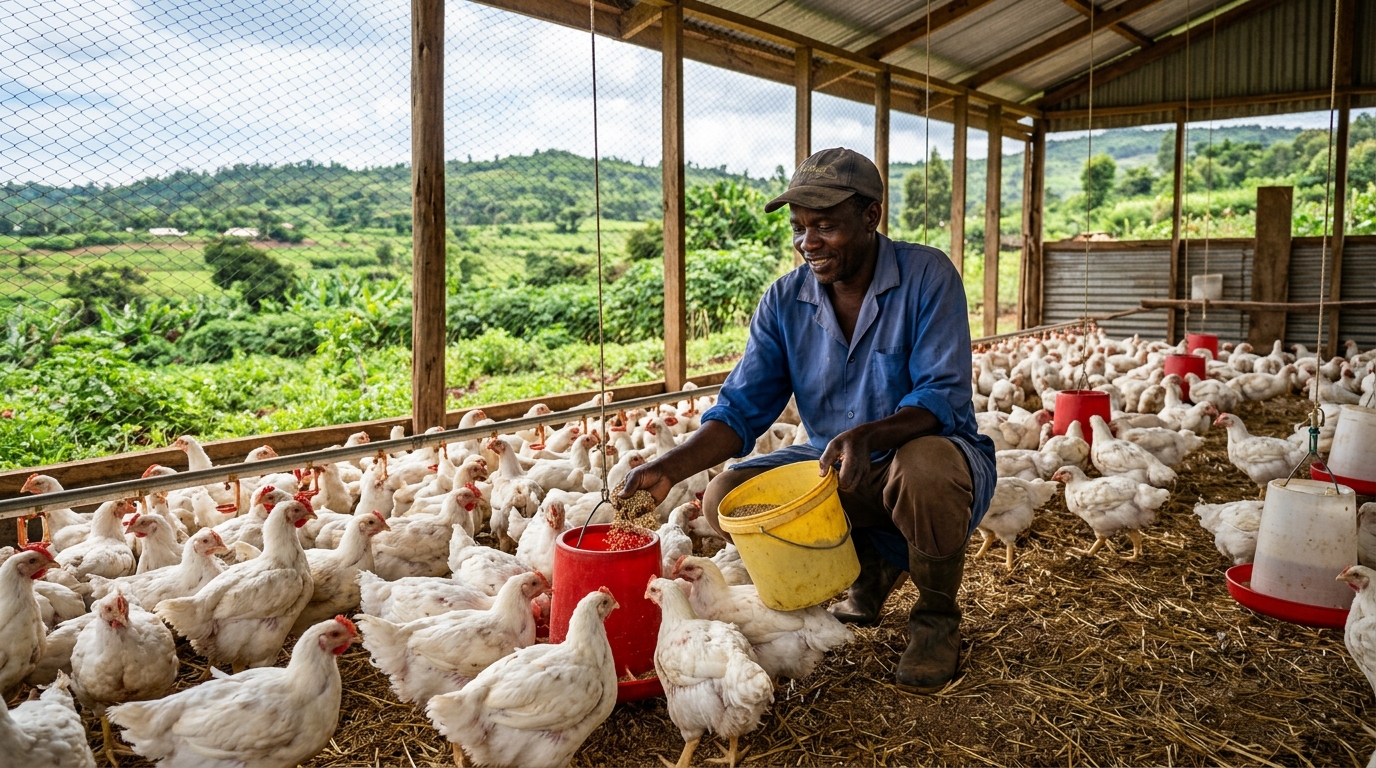
Poultry farming in Tanzania is one of the most accessible, scalable, and genuinely profitable agricultural ventures available to both new and experienced entrepreneurs across the country. Whether you are a smallholder farmer in Dodoma looking to supplement your income, a young graduate in Dar es Salaam hunting for a viable business idea, or a seasoned agripreneur ready to scale operations, the chicken business in Tanzania offers an opportunity that is hard to ignore. With a growing middle class, increasing urban populations hungry for affordable protein, and government programs actively supporting the livestock sector, the timing to enter or expand in poultry farming has never been more compelling.
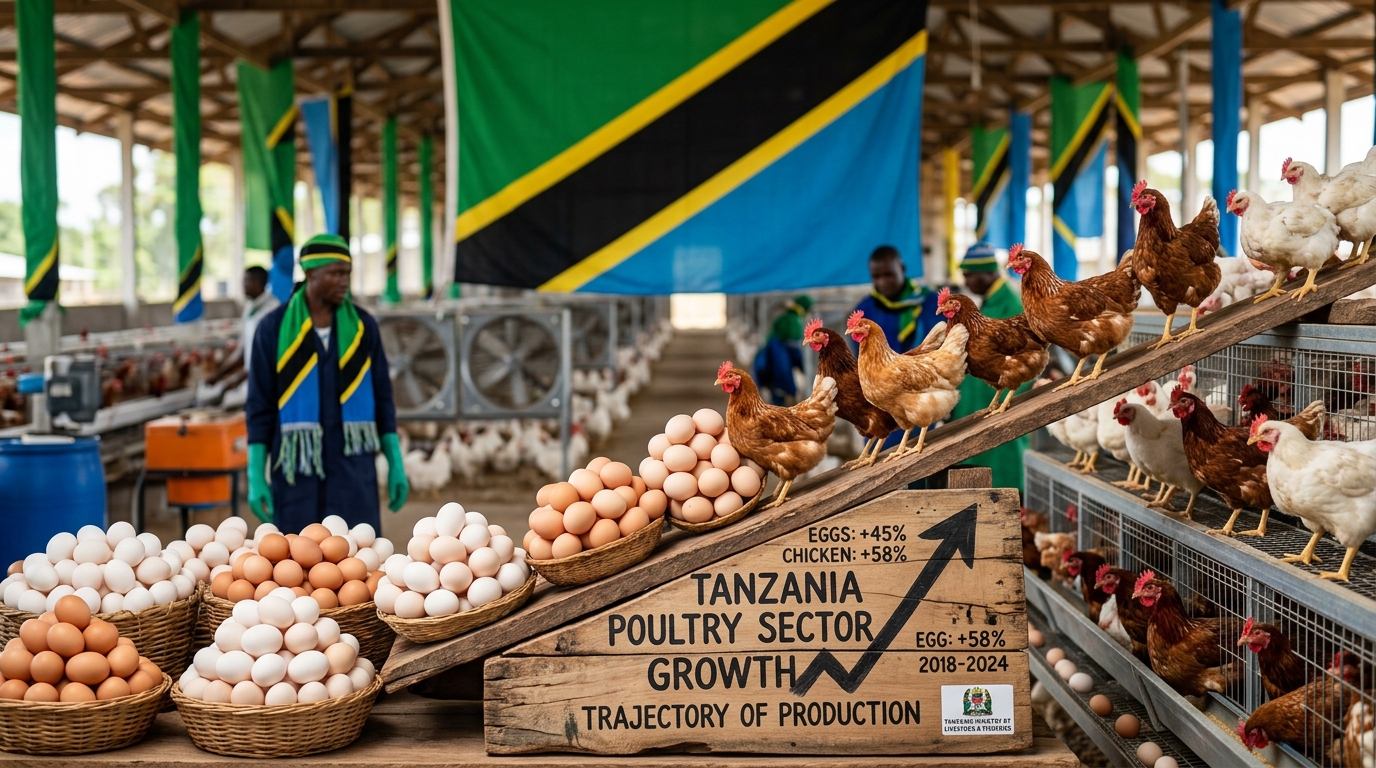
Tanzania's national chicken population is estimated at over 78 million birds, according to data from the Ministry of Livestock and Fisheries — and yet the country still faces a significant supply gap in quality poultry products. Per capita consumption of poultry meat and eggs in Tanzania remains well below the African average, which means demand is growing faster than local supply can keep up. This is a green light for any serious entrepreneur.
But here is the truth that many online guides skip: poultry farming is not a get-rich-quick scheme. It is a proper business that demands planning, knowledge, capital, and consistent management. The difference between a farmer who fails after the first flock and one who builds a thriving poultry empire often comes down to preparation and understanding the full picture — from choosing the right breed and building the correct housing to managing diseases, marketing your products, and keeping your finances healthy.
This comprehensive guide covers everything you need to know about starting and growing a profitable poultry chicken business in Tanzania. We walk you through breeds, housing, feeds, health management, financial planning, marketing strategies, and the common mistakes you absolutely must avoid. By the time you finish reading, you will have a clear, actionable roadmap to launch or improve your poultry business with confidence.
1. Why Poultry Farming in Tanzania Makes Strong Business Sense
1.1 Rising Demand for Protein in Urban Centers
Tanzania's urban population is growing rapidly. Cities like Dar es Salaam, Mwanza, Arusha, Mbeya, and Dodoma are expanding at pace, with urban dwellers increasingly adopting diets that include more animal protein. Chicken is widely regarded as the most affordable and acceptable meat across all social classes in Tanzania, making it a staple in restaurants, street food stalls, households, and hotels. This consistent demand creates a reliable customer base that any poultry farmer can tap into.
1.2 Government Support and Policy Environment
The Tanzanian government, through its Five-Year Development Plans and the Ministry of Livestock and Fisheries, has identified the livestock sub-sector as a priority area for economic transformation. Programs such as the Tanzania Agricultural Development Bank (TADB) and SACCOS (Savings and Credit Cooperative Societies) provide financing options specifically for livestock farmers. Additionally, the government has invested in vaccination programs and veterinary extension services that reduce input costs for farmers.
1.3 Relatively Low Entry Capital Compared to Other Livestock
Compared to cattle or pig farming, poultry farming — particularly starting with layer or broiler chickens — requires significantly lower startup capital. A beginner can start with as few as 50–100 birds with a modest investment and grow from there. This low barrier to entry makes it an ideal first agribusiness for young entrepreneurs and rural families.
1.4 Short Production Cycles Mean Faster Returns
One of the most attractive features of the chicken business is the short production cycle. Broiler chickens can be harvested and sold in as little as 6 to 8 weeks from day-old chick stage. Layers begin producing eggs within 18 to 22 weeks and can continue laying for up to 72 weeks or more. This means a poultry farmer can see returns within months — not years — unlike crops or larger livestock.
2. Types of Poultry Farming Systems in Tanzania
Not all poultry farming is the same. In Tanzania, there are several farming systems used, each with different levels of investment, management intensity, and profitability potential. Understanding these systems helps you choose the right fit for your resources and goals.
2.1 Free-Range / Extensive System
The free-range system is the oldest and most traditional method practiced in Tanzanian villages. Chickens — typically indigenous breeds like the Tanzania Kuchi or ordinary local birds — roam freely around the homestead, foraging for food. This system requires very little capital investment but also yields very low productivity. Mortality rates are high due to predators and disease, and growth is slow.
Best for: Subsistence farmers, rural households supplementing their diet and income.
2.2 Semi-Intensive System
The semi-intensive system is a middle ground where chickens have access to a defined outdoor run area during the day but are housed in a secure poultry house at night. Farmers supplement foraged food with commercial feeds. This system works well with improved indigenous breeds and crossbreeds.
Best for: Small to medium-scale farmers who want to improve productivity over the traditional system without full commercial investment.
2.3 Intensive (Commercial) System
The intensive commercial system is the backbone of profitable poultry farming in Tanzania's growing urban and peri-urban markets. In this system, birds are housed permanently in purpose-built poultry houses. All inputs — feed, water, ventilation, lighting, and health management — are controlled by the farmer. This system is used for both broiler production (meat birds) and layer production (egg-laying birds).
Best for: Medium to large-scale commercial farmers, agripreneurs, and investors targeting consistent, high-volume output.
3. Choosing the Right Breed for Your Tanzania Poultry Farm
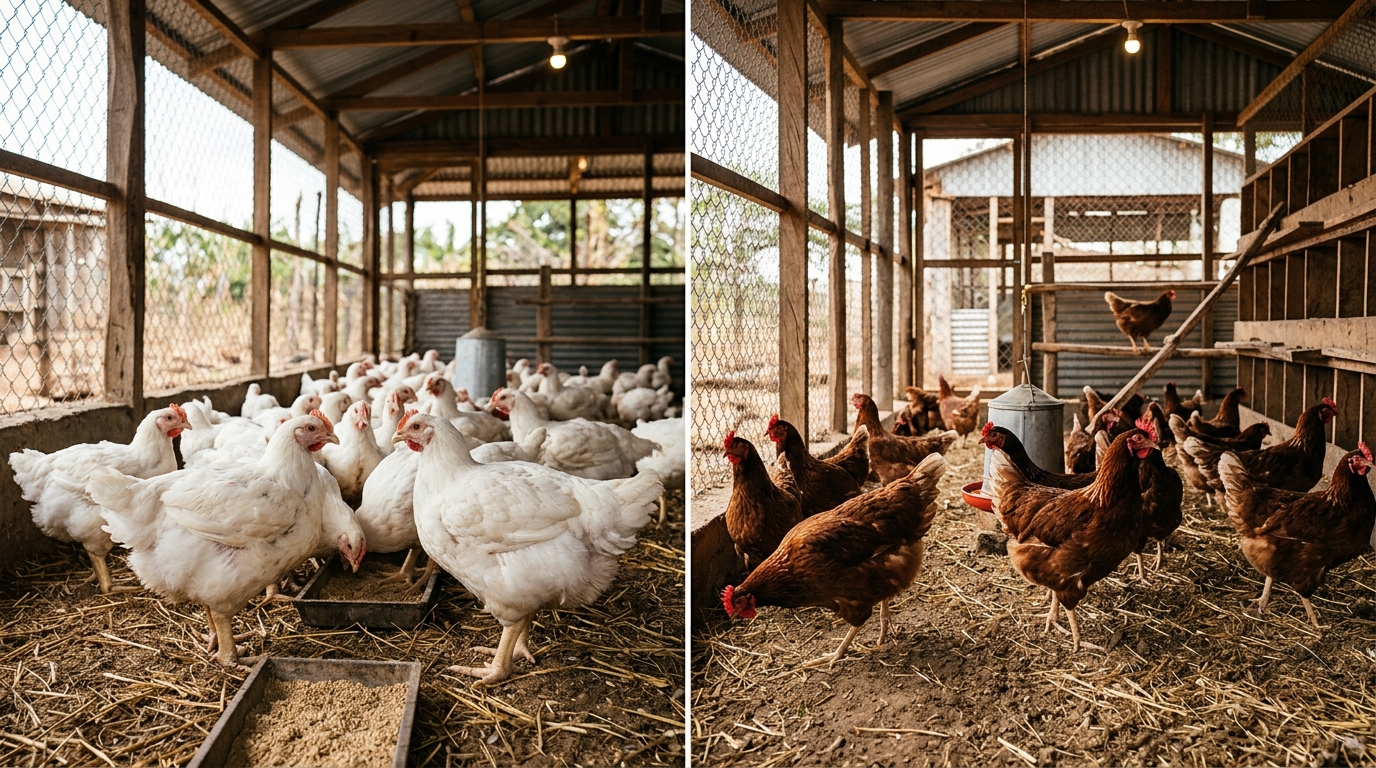
Breed selection is arguably one of the most critical decisions you will make as a poultry farmer. The wrong breed for your production system and market will cost you money in poor feed conversion, high mortality, and disappointing output. Here is a breakdown of the most commercially viable breeds available in Tanzania.
3.1 Broiler Breeds (Meat Production)
Broiler chickens are specifically bred for fast, efficient meat production. In Tanzania, the most widely used commercial broiler breeds include:
- Ross 308 and Ross 708 — Among the most popular worldwide, these birds reach market weight (2–2.5 kg) in 35–42 days under optimal conditions. Excellent feed conversion ratio.
- Cobb 500 — Known for excellent feed efficiency and good breast meat yield. Widely available through major hatcheries in Tanzania.
- Arbor Acres — A robust broiler strain with good performance under African conditions, slightly more tolerant of heat stress than some European strains.
3.2 Layer Breeds (Egg Production)
Layer hens are bred specifically to maximize egg output over a long production period. Top commercial layer breeds available in Tanzania include:
- Hy-Line Brown — One of the most popular layers globally, capable of producing 300–320 eggs per year under good management. A gentle bird that adapts well to Tanzanian conditions.
- Lohmann Brown — Excellent egg production with strong shell quality. Known for low feed consumption relative to output.
- ISA Brown — Hardy, productive, and widely available. Tolerates moderate heat stress reasonably well.
3.3 Improved Indigenous/Dual-Purpose Breeds
For farmers operating in peri-urban or rural areas or targeting the live bird market, improved indigenous and dual-purpose breeds offer a viable middle path:
- TPRI Improved Kuchi — Developed at the Tanzania Livestock Research Institute (TALIRI), this improved version of the indigenous Kuchi breed offers better growth rates and egg production while maintaining disease resistance.
- Kuroiler (India-origin, adapted in East Africa) — A dual-purpose breed with impressive adaptability to free-range and semi-intensive systems.
- SASSO T451 (Multi-colored broiler) — Popular in Tanzania's live bird markets where consumers prefer yellow-skinned, slower-growing "indigenous-looking" chickens that command premium prices.
4. Setting Up Your Poultry House: Housing Requirements in Tanzania
Your poultry house is your factory floor. Poor housing leads to stress, disease, and death. A well-designed chicken house, on the other hand, creates the stable environment that birds need to grow fast, lay consistently, and stay healthy. Here is what you need to know about housing for Tanzanian conditions.
4.1 Key Principles of Poultry House Design in Tanzania
Tanzania's climate varies from coastal humidity in Dar es Salaam and Tanga to highland cool temperatures in Arusha and Iringa. Your housing design must account for your specific climatic zone. However, several universal principles apply across all regions:
- Orientation: Orient the long axis of the house East-West to minimize direct afternoon sunlight entering the house, reducing heat load.
- Ventilation: Natural cross-ventilation is critical. Open-sided houses with adjustable curtains or wire mesh sides work excellently in Tanzania's warm climate.
- Space allowance: For broilers — allow at least 10 birds per square meter. For layers in deep litter — allow 5–6 birds per square meter. Overcrowding is a leading cause of disease and cannibalism.
- Roof design: Use high-pitched roofs with a ridge opening to allow hot air to escape. Corrugated iron sheets with ceiling boards or shade netting help reduce heat stress.
- Floor construction: Concrete floors are ideal for biosecurity and easy cleaning. Compacted murram (laterite) floors work for smaller farms but are harder to disinfect thoroughly.
- Predator-proofing: Ensure all openings are secured with welded wire mesh (hardware cloth) with openings no larger than 2.5 cm to keep out rats, mongooses, and wild birds.
4.2 House Size Calculations
Here is a quick reference for planning your house based on flock size:
| Flock Size (Birds) | Recommended Floor Area (Broilers) | Recommended Floor Area (Layers) |
|---|---|---|
| 100 birds | 10 sq. meters | 17–20 sq. meters |
| 500 birds | 50 sq. meters | 85–100 sq. meters |
| 1,000 birds | 100 sq. meters | 170–200 sq. meters |
| 2,000 birds | 200 sq. meters | 350–400 sq. meters |
4.3 Essential Equipment for Your Poultry House
- Drinkers (waterers): Nipple drinkers or bell drinkers — provide clean water at all times. One nipple per 8–10 birds.
- Feeders: Tubular or trough feeders depending on the stage of production. Chick feeders (flat trays) for the first week.
- Brooding equipment: Gas or electric brooders to keep chicks warm during the first 3 weeks of life (target 32–35°C at day 1, reducing by 2–3°C per week).
- Lighting: Artificial lighting is particularly important for layers to stimulate and maintain egg production (14–16 hours of light per day).
- Nesting boxes (for layers): One nest for every 5–6 layer hens prevents egg breakage and reduces floor eggs.
- Perches/roosts (for deep litter layers): 20 cm of perch space per bird.
5. Poultry Feed Management: The Engine of Your Profits
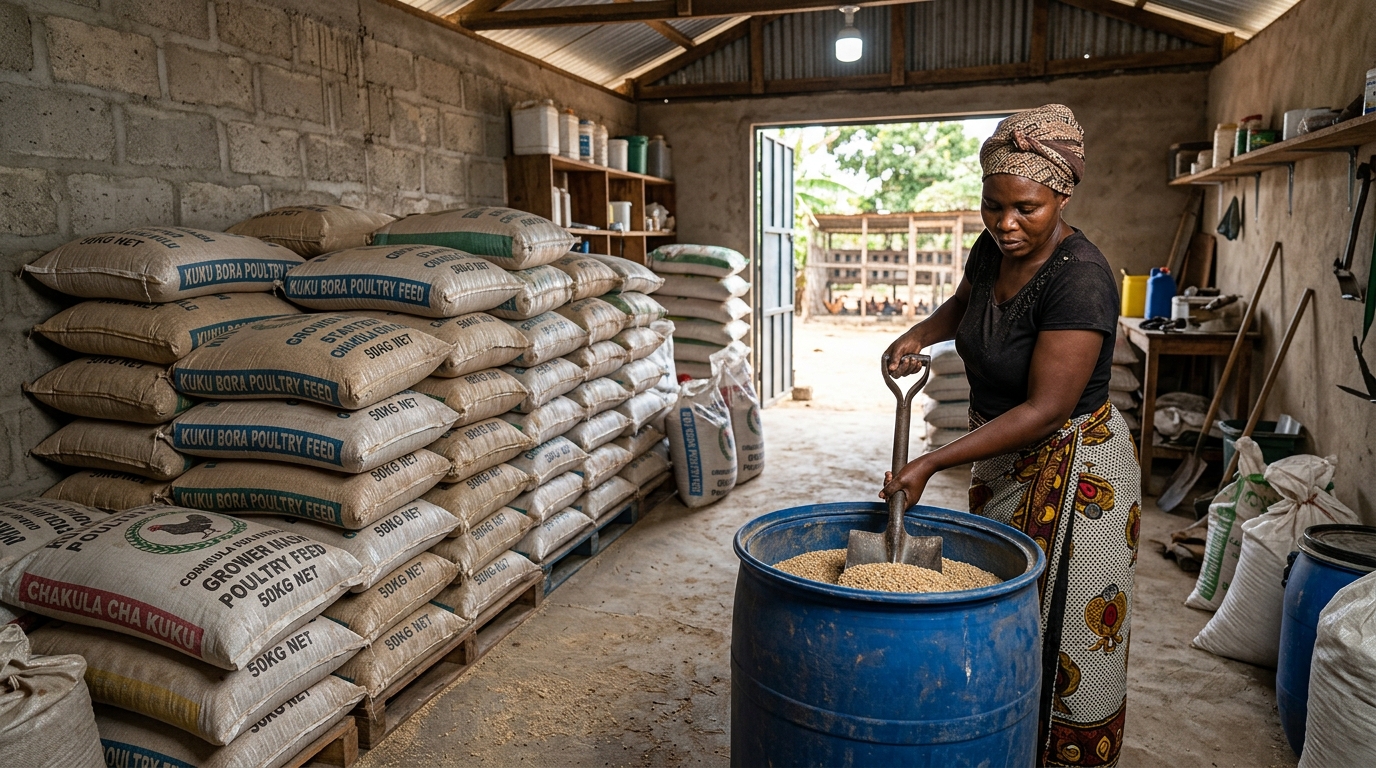
Feed typically accounts for 60–70% of total poultry production costs, according to agricultural economists at Sokoine University of Agriculture (SUA) in Morogoro. This means your feed management strategy is directly tied to your profitability. Getting feed right is non-negotiable.
5.1 Feed Requirements by Stage of Production
For Broilers:
- Starter feed (Week 1–2): High protein (22–24%), given as crumbs. Critical for early growth and immune system development.
- Grower feed (Week 3–4): Protein 20–22%, given as pellets or mash. Supports muscle development.
- Finisher feed (Week 5 to slaughter): Protein 18–20%, higher energy content. Promotes final weight gain and flesh quality.
For Layers:
- Chick mash (Week 1–8): Protein 20–22%. Focus on healthy early growth.
- Grower mash (Week 9–18): Protein 15–18%. Moderate energy to avoid excess body fat before lay.
- Layer mash (Week 19 onwards): Protein 16–18%, high calcium (3–4%) for strong eggshells. Maintain through the entire laying period.
5.2 Buying Commercial Feed vs. Mixing Your Own
This is a debate that every Tanzanian poultry farmer faces. Commercial feeds from brands like Silverlands Feeds, Cargill, Farm Select, and Tanfeeds offer convenience and nutritional consistency. However, they come at a higher cost per kilogram.
Many medium to large-scale farmers in Tanzania are turning to on-farm feed mixing to reduce costs. Common locally available ingredients include:
- Maize (energy source) — widely available across Tanzania
- Soybean meal (protein source) — grown in Rukwa, Mbeya, and Iringa regions
- Fish meal (protein and lysine) — available from Tanzania's coastal regions and Lake Victoria
- Sunflower cake / cottonseed cake (protein)
- Limestone / oyster shell (calcium for layers)
- Vitamin and mineral premixes
- Salt and di-calcium phosphate
5.3 Water Management
Water is often overlooked but is equally as important as feed. Chickens need access to clean, fresh water at all times. A laying hen drinks approximately 250–300 ml of water per day; in hot conditions this can double. Broilers drink roughly twice their feed intake in water.
- Flush and clean drinkers daily to prevent bacterial growth (especially E. coli and Salmonella)
- If using municipal water, test for chlorine levels — very high chlorine suppresses gut flora
- Consider water acidification (citric acid) during periods of heat stress to maintain feed intake
6. Poultry Health Management and Disease Control in Tanzania
Disease outbreaks are the number one cause of catastrophic losses for poultry farmers in Tanzania. A single Newcastle Disease outbreak, if not contained, can wipe out an entire flock within days. This section is critical reading for every serious poultry farmer.
6.1 Major Poultry Diseases in Tanzania You Must Know
| Disease | Cause | Key Symptoms | Prevention/Control |
|---|---|---|---|
| Newcastle Disease (ND) | Paramyxovirus | Twisting of neck, labored breathing, sudden death | Vaccination (La Sota, Clone 30, I2 strain) |
| Gumboro (IBD) | Birnavirus | Ruffled feathers, white diarrhea, prostration at 3–6 weeks | Vaccination at Day 14 and Day 21 |
| Marek's Disease | Herpesvirus | Leg/wing paralysis, tumors | Vaccinate day-old chicks (in ovo or at hatchery) |
| Fowl Typhoid / Pullorum | Salmonella gallinarum | Greenish diarrhea, sudden deaths | Biosecurity, clean chick sourcing, antibiotics under vet guidance |
| Coccidiosis | Eimeria protozoa | Bloody droppings, lethargy, weight loss | Coccidiostats in feed, dry litter management |
| Infectious Bronchitis (IB) | Coronavirus | Respiratory distress, drop in egg production | Vaccination, biosecurity |
6.2 Vaccination Schedule for Commercial Layers (Tanzania)
The following is a general vaccination schedule widely recommended by Tanzanian veterinarians. Always confirm with your local vet as regional disease pressure may vary:
- Day 1: Marek's Disease (administered at hatchery)
- Day 7–10: Newcastle Disease (La Sota) — via eye drop or drinking water
- Day 14: Gumboro (IBD) — via drinking water
- Day 21: Gumboro booster
- Day 28: Newcastle Disease booster (La Sota)
- Week 6: Fowl Pox — via wing web stab
- Week 8: Newcastle Disease (Clone 30 or Komarov)
- Week 16–18: Newcastle Disease booster before lay + IB (if available)
- Every 2 months during lay: Newcastle Disease booster
6.3 Biosecurity: Your First Line of Defense
Biosecurity refers to all the practices you put in place to prevent disease from entering your farm. The strongest vaccine in the world cannot protect your flock if your biosecurity is poor. Key biosecurity practices for Tanzanian poultry farmers include:
- "All-in, all-out" management: Never mix birds of different ages in the same house
- Farm entrance controls: Install a foot dip (disinfectant bath) at every house entrance. Visitors should change into farm clothing and boots.
- Quarantine new birds: Always isolate newly purchased birds for at least 2–3 weeks before introducing them to your main flock
- Dead bird disposal: Never leave dead birds in or near the house. Bury deep (at least 1 meter) or incinerate.
- Clean-out between flocks: After every flock, thoroughly clean, disinfect, and rest (empty) the house for a minimum of 2 weeks before the next flock.
- Control wild birds and rodents: Wild birds are major Newcastle Disease vectors in Tanzania. Seal all openings with wire mesh.
7. Step-by-Step Guide to Starting a Broiler Farm in Tanzania
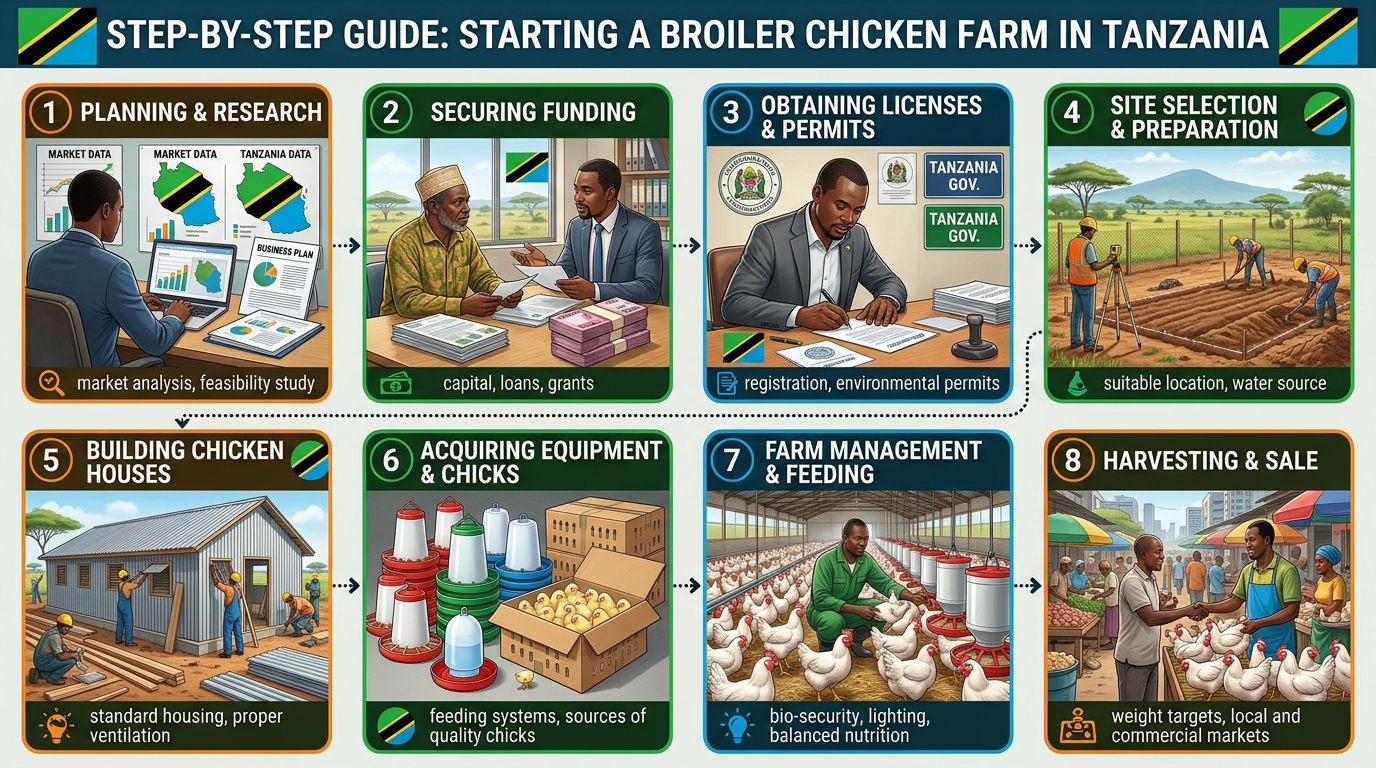
Let us get practical. Here is a step-by-step guide to starting a 500-bird broiler farm in Tanzania — a manageable size for a first-time commercial poultry farmer.
- Step 1 — Write a Business Plan: Before spending a shilling, document your plan. Include production costs, projected revenue, target market, and break-even analysis. [LINK: How to write a poultry business plan in Tanzania]
- Step 2 — Secure Land and Location: Your farm should be at least 500 meters from other poultry farms and 100 meters from residential areas. Choose a location with good road access for deliveries and collections. Proximity to your target market reduces transport costs.
- Step 3 — Construct Your Poultry House: Build a house of at least 50 square meters for 500 broilers. East-West orientation, good ventilation, concrete floor, and predator-proof sides.
- Step 4 — Source and Install Equipment: Purchase drinkers, feeders, brooders, thermometers, and weighing scales before your chicks arrive.
- Step 5 — Prepare the House (Brooding Setup): Lay 5–7 cm deep wood shavings litter on the floor. Set up brooders to pre-heat the house to 32–34°C at least 24 hours before chick arrival. Place paper or cardboard on top of litter for the first 3 days to prevent chicks eating bedding.
- Step 6 — Receive and Settle Day-Old Chicks: Receive chicks early in the morning or evening to avoid heat stress. Dip each chick's beak in water immediately upon arrival to encourage drinking. Provide warm glucose or electrolyte water for the first 24 hours.
- Step 7 — Daily Management (Weeks 1–7): Monitor temperature, feed intake, and water consumption daily. Observe bird behavior — clustering under brooder (too cold), moving away from brooder (too hot), evenly distributed (just right). Follow your vaccination schedule strictly.
- Step 8 — Marketing and Selling: Begin marketing from Week 4. Contact butchers, restaurants, hotels, and direct consumers. Most Tanzanian broilers reach 2–2.5 kg by 5–6 weeks. Sell live or arrange on-farm slaughter for better margins.
8. Egg Production (Layer Farming) in Tanzania: A Full Guide
The egg market in Tanzania is enormous and underserved. Eggs are sold in every town, village, and city market. They are used in homes, bakeries, restaurants, and street food. Yet many regions still import eggs from neighboring countries, indicating a local production gap. Layer farming, when done right, can provide steady, daily income — one of its most attractive features.
8.1 Key Performance Indicators for Layer Farms
- Age at first egg: 18–22 weeks (depends on breed and rearing quality)
- Peak production: 90–95% hen-day egg production at around 28–32 weeks
- Production cycle duration: 72–80 weeks from point of lay to culling
- Target hen-day production: Maintain above 80% through the majority of the laying period
- Feed conversion (layers): 2.2–2.5 kg feed per dozen eggs
8.2 Egg Marketing in Tanzania
Marketing is where many Tanzanian layer farmers fall short. They focus so much on
Conclusion: Your Path to a Profitable Poultry Farming Business in Tanzania
Poultry farming in Tanzania is not just an agricultural venture — it is a proven, scalable business opportunity that continues to feed families, generate employment, and build generational wealth across the country. Throughout this guide, we have walked you through everything you need to launch and grow a profitable chicken business in Tanzania, from selecting the right breed and securing land to navigating disease management, market access, and government regulations.
The Tanzanian poultry industry is expanding rapidly, driven by a growing urban population hungry for affordable protein, rising middle-class purchasing power, and increasing demand from hotels, restaurants, and institutions. The opportunity is real — but so is the competition. What separates thriving poultry farmers from those who struggle is preparation, consistency, and a willingness to invest in the right knowledge before spending the first shilling.
Whether you are starting with 50 broilers in a backyard coop in Dodoma or planning a 5,000-layer commercial operation outside Dar es Salaam, the principles remain the same: manage your costs tightly, protect your flock aggressively, build reliable market relationships early, and reinvest your profits intentionally. Success in poultry farming Tanzania rewards those who treat it like a business — not a hobby.
✅ Key Takeaways
- Choose the right breed for your goal: Broilers for fast meat production (6–8 weeks), layers for consistent egg income, and indigenous breeds for premium local markets with lower input costs.
- Feed and health management are your biggest cost drivers: Feed alone accounts for 60–70% of production costs — sourcing locally and formulating your own feed where possible dramatically improves your profit margins.
- Disease prevention beats treatment every time: A strict vaccination schedule for Newcastle disease, Gumboro, and Marek's disease can save your entire flock and protect months of investment.
- Market access must be planned before your first chick arrives: Identify your buyers — local markets, butcheries, restaurants, or supermarkets — and build those relationships during your grow-out period, not after harvest.
- Register your business and access available support: Tanzania's Ministry of Livestock and Fisheries, SIDO, and agricultural financial institutions offer training, subsidies, and affordable credit specifically designed to help poultry farmers scale sustainably.
Ready to take the next step? Download the Tanzania Poultry Sector Development Programme (TPSDP) guidelines from the Ministry of Livestock and Fisheries website, then visit your nearest SIDO regional office this week to inquire about business registration